The Ministry of Housing and Urban Affairs and the Department of Drinking Water and Sanitation jointly launched the nationwide Swachhata Hi Seva 2026 campaign on 17 September 2026 with a plantation drive under Ek Ped Maa Ke Naam at Children’s Park near India Gate in New Delhi. The campaign carries the theme Swachhata Mein Sahbhag, Swachh Bharat, Viksit Bharat and will continue till 2 October 2026, which is observed as Swachh Bharat Diwas. Built around five central pillars, it aims to convert citizen participation into visible cleanliness across villages and cities.
What Is Swachhata Hi Seva?
Swachhata Hi Seva is an annual cleanliness campaign held from 17 September to 2 October as a prelude to Swachh Bharat Diwas. Launched in 2017, it is jointly organised by the Department of Drinking Water and Sanitation and the Ministry of Housing and Urban Affairs to promote citizen led shramdaan.
The word swachhata means cleanliness. The word seva means service. The campaign treats cleanliness as service to the nation that every person can offer through voluntary labour, which is called shramdaan. The period from 17 September to 2 October ends on the birth anniversary of Mahatma Gandhi, which is observed as Swachh Bharat Diwas. The idea is to pay tribute to Gandhi, who viewed cleanliness as next to godliness, through collective action.
The Swachhata Hi Seva 2026 campaign follows a Whole of Government and Whole of Society approach. Whole of Government means all ministries, state departments, urban local bodies, panchayats and public sector units work together. Whole of Society means schools, youth groups, resident associations, traders, self help groups and ordinary citizens also take part. The 2026 theme, Swachhata Mein Sahbhag, Swachh Bharat, Viksit Bharat, states this idea clearly. It says a clean India and a developed India are possible only when everyone takes part.
The scale of participation has grown sharply over the years. The Swachhata Hi Seva 2025 edition drew participation from more than 18 crore citizens, including about 14 crore people from rural areas. The 2026 edition seeks to reach every section of society with a special focus on visible cleanliness at dirty spots, public places, schools and tourist sites.
What Is the Swachh Bharat Mission?
Swachh Bharat Mission is India’s flagship cleanliness mission launched on 2 October 2014 to make the country open defecation free. It was launched to mark the 150th birth anniversary of Mahatma Gandhi and to improve sanitation, waste management and public health through mass participation.
The Swachh Bharat Mission (SBM), also called Swachh Bharat Abhiyan, began on 2 October 2014. The central government launched it because sanitation coverage in rural India was only about 39 percent in 2014. Poor sanitation caused disease, unsafe conditions for women and children, and pollution of water and soil. The mission set out to end open defecation by building toilets and changing daily habits through a mass movement.
The mission has two main arms that work in rural and urban India. The Department of Drinking Water and Sanitation, which functions under the Ministry of Jal Shakti, handles the rural part called SBM Grameen. The Ministry of Housing and Urban Affairs (MoHUA), headquartered at Nirman Bhawan in New Delhi, handles the urban part called SBM Urban. This division explains why Swachhata Hi Seva is always jointly organised by DDWS and MoHUA.
| Feature | SBM Grameen | SBM Urban |
|---|---|---|
| Area covered | Villages and rural households | Cities, towns and urban local bodies |
| Nodal body | Department of Drinking Water and Sanitation | Ministry of Housing and Urban Affairs |
| Phase I goal (2014 to 2019) | Open Defecation Free villages with over 10 crore household toilets | Open Defecation Free cities with 63.83 lakh household toilets and 6.36 lakh community toilet seats |
| Phase II focus | ODF Plus Model villages with solid and liquid waste management from 2020-21 to 2025-26 | Garbage Free cities with source segregation and scientific waste processing from 1 October 2021 to October 2026 |
Phase I achieved its core target when all villages declared themselves open defecation free by 2 October 2019. Phase II moved beyond toilets. SBM Grameen Phase II aims to make villages ODF Plus Model, which means they sustain toilet use and also manage solid waste and liquid waste safely. SBM Urban Phase II, known as SBM-U 2.0, has a budget outlay of ₹1,41,600 crore and aims to give every city garbage free status through door to door collection, segregation and scientific processing.
How Swachhata Hi Seva 2026 Was Launched
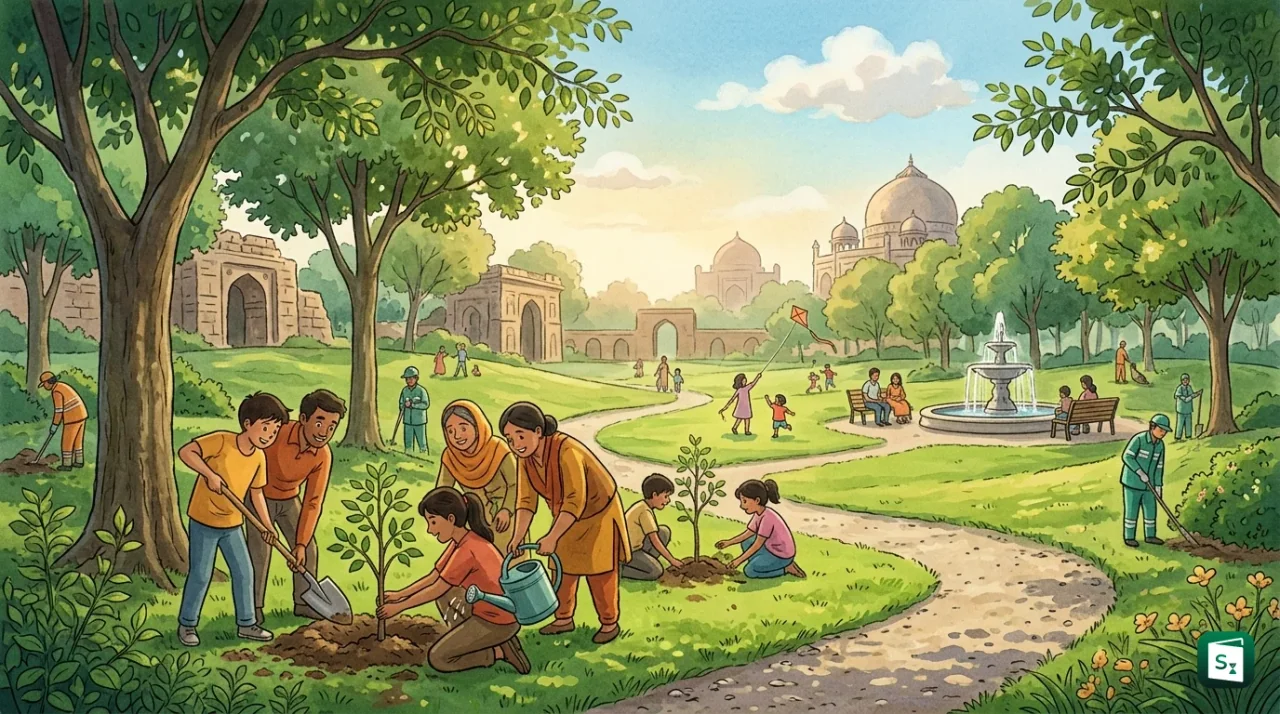
The Department of Drinking Water and Sanitation and the Ministry of Housing and Urban Affairs launched Swachhata Hi Seva 2026 on 17 September 2026 at Children’s Park near India Gate in New Delhi. The launch event was organised jointly with the New Delhi Municipal Council and marked by a plantation drive under Ek Ped Maa Ke Naam.
The launch brought together senior officials in a joint show of coordination. The event saw the participation of Ashok K K Meena, Secretary of the Department of Drinking Water and Sanitation, Satendra Singh, Secretary of the Department of Urban Development under MoHUA, and D Thara, Secretary of the Department of Capital Development under MoHUA, along with senior officers from both sides. Union Housing and Urban Affairs Minister Manohar Lal had reviewed preparations with states and union territories on 10 September 2026 and asked for coordinated action, wide citizen participation and visible results at the local level.
The choice of a plantation drive for the launch links cleanliness with green growth. Ek Ped Maa Ke Naam, which means one tree in the name of mother, is a national tree plantation initiative launched in June 2024. Under the initiative, every citizen plants and cares for a tree as a tribute to their mother and uploads the record on the Ek Ped Maa Ke Naam portal. The Swachhata Hi Seva 2026 launch used this drive to show that clean public places and green public places must grow together. Saplings planted at Children’s Park also help sensitise children and families who visit the park daily.
The Swachhata Hi Seva 2026 campaign runs from 17 September to 2 October 2026. The closing day coincides with Gandhi Jayanti and Swachh Bharat Diwas. On 2 October, rural areas will hold Special Gram Sabhas and urban areas will hold Special Council Meetings to review outcomes, spread awareness about the Solid Waste Management Rules, 2026 and discuss village progress toward ODF Plus Model status.
Five Central Pillars of Swachhata Hi Seva 2026
The Swachhata Hi Seva 2026 campaign rests on five central pillars that divide work clearly between places, people and prosperity. The five pillars allow a panchayat, a city ward and a central ministry to pick matching activities and report them on the Swachhata Hi Seva portal.
| Pillar | Main focus | Typical activity |
|---|---|---|
| Transformation of Cleanliness Target Units and clean public places | Time bound clearing of dirty spots and beautification | Clearing garbage dumps, cleaning markets, bus stands and water bodies, uploading before and after photos |
| Swachh Paathshala, Yuva for Swachhata | Connecting students and youth to waste systems | Swachhata Gyan Yatras to waste plants, debates, quizzes and Swachhata Evam Jal Sanchay Samvad |
| SafaiMitra Suraksha Evam Samman Shivir | Safety, health and respect for sanitation workers | Single window camps for health checkups, welfare linkage, protective gear and felicitation |
| Jan Bhagidari for Swachhata | Mass advocacy and rule awareness | Rallies, four way segregation drives, sports for cleanliness, tourist site cleaning and plantation |
| Swachhata se Samriddhi | Circular economy and waste to wealth | Reduce Reuse Recycle centres, waste to art, composting and material recovery |
Cleanliness Target Units and Clean Public Places
A Cleanliness Target Unit (CTU) is a dirty or neglected spot that is marked for time bound cleaning. It can be a garbage dump, a clogged drain, a littered market lane, a weedy park corner or the area behind a public office. Local bodies first list each CTU on the Swachhata Hi Seva portal, assess waste quantity, arrange workers, machines, safety gear and drinking water, and then clean and beautify the site. Local bodies also upload before and after photographs to prove change. Private firms and public sector units are encouraged to adopt CTU sites. High footfall places such as bus stands, railway stations, beaches, zoos, monuments, river fronts and ghats receive special attention. On World Tourism Day on 27 September, tourist sites and tourist centric beaches get focused cleaning drives.
Swachh Paathshala, Yuva for Swachhata
Swachh Paathshala means a clean school. Yuva for Swachhata means youth for cleanliness. Under this pillar, students visit solid and liquid waste assets through Swachhata Gyan Yatras, which are guided learning tours to compost plants, material recovery facilities and sewage treatment units. Schools also hold interaction sessions on water saving through Swachhata Evam Jal Sanchay Samvad, along with painting, essay, debate and quiz contests. The aim is simple. When a child sees how waste becomes compost or how plastic is sorted for recycling, the habit of segregation starts early and stays for life.
SafaiMitra Suraksha Evam Samman Shivir
SafaiMitra means a friend of cleanliness. The term covers sanitation workers, waste pickers and swachhagrahis who keep streets and sewers clean. Suraksha means safety and Samman means respect. Under this pillar, urban local bodies and panchayats organise SafaiMitra Suraksha Evam Samman Shivirs, which are single window camps. Doctors conduct preventive health checkups at these camps and distribute personal protective equipment (PPE) such as gloves, masks and safety kits. Officials link eligible workers to social security and welfare schemes and felicitate outstanding workers in public. The shivir model reduces paperwork because health, welfare and recognition services reach the worker at one place.
Jan Bhagidari for Swachhata
Jan Bhagidari means public participation. This pillar spreads awareness about the Solid Waste Management Rules, 2026 and about four way source segregation. The four streams are wet waste such as kitchen waste, dry waste such as plastic and paper, sanitary waste such as diapers, and special care waste such as paints, bulbs and medicines. Citizens are asked to hand over only segregated waste to collectors. The pillar also includes RRR Recyclers Meets for reduce, reuse and recycle workers, Sports for Swachhata leagues, cultural events under Swachh Parv and Harit Parv during festivals, and plantation under Ek Ped Maa Ke Naam. A nationwide voluntary shramdaan called Ek Din, Ek Ghanta, Ek Saath is scheduled for 1 October 2026, when citizens clean their neighbourhoods together for one hour.
Swachhata se Samriddhi
Swachhata se Samriddhi means prosperity through cleanliness. This pillar promotes a circular economy, where waste is not thrown away but reused as raw material. Cities set up temporary RRR centres where citizens deposit old clothes, books, plastic and e waste. Material recovery facilities sort dry waste for recycling. Compost units turn wet waste into manure through composting or bio methanation. Self help groups create saleable products from scrap through waste to wealth and waste to art work. Local bodies are also encouraged to earn carbon credits by processing waste scientifically instead of dumping it.
What Is Swachhata Pakhwada and How Does the Swachhata App Help?
The Swachhata Hi Seva 2026 fortnight works with year round tools such as Swachhata Pakhwada, Swachhata Action Plans and the Swachhata app. These tools keep ministries, cities and citizens engaged even after the main campaign ends on 2 October.
What Is Swachhata Pakhwada?
Swachhata Pakhwada is a fifteen day cleanliness fortnight observed by every central ministry and its offices to intensify sanitation work. Introduced in 2016, it divides the year into dedicated slots so that each ministry plans activities, reviews progress and reports outcomes.
Swachhata Pakhwada means a fortnight for cleanliness. The Cabinet assigns a fixed fifteen day slot to each ministry. During its slot, the ministry cleans office premises, toilets, canteens and surroundings, repairs sanitation assets, holds plantation and pledge events, and spreads awareness in schools and public places. The Department of Drinking Water and Sanitation and the Ministry of Housing and Urban Affairs coordinate the calendar, while the concerned ministry implements work in its own buildings and field units. The related idea of a Swachhata Action Plan is the annual cleanliness plan that each ministry prepares with budget, targets and timelines.
How to Use the Swachhata App?
The Swachhata app is a citizen grievance and monitoring app run by the Ministry of Housing and Urban Affairs to report dirty spots and track their cleaning. A citizen downloads the app, photographs the garbage or overflowing bin, and uploads the complaint with location for the urban local body to resolve.
The full name of the platform is the Swachhata-MoHUA app. It is free on Android and iOS and also works through the Swachhata Hi Seva portal and the Swachhatam portal for reporting. After a citizen files a complaint, the concerned urban local body receives an alert, cleans the spot and uploads an after photo. The citizen can then give feedback and reopen the case if work is poor. The app also supports the annual Swachh Survekshan, which is India’s city cleanliness ranking started in 2016, by collecting citizen feedback on garbage collection, segregation and public toilets. Students additionally use the Swachh Vidyalaya Puraskar framework, which rewards schools for safe water, toilets, handwashing and waste practices.
Key Takeaways
- Swachhata Hi Seva 2026 was jointly launched by MoHUA and DDWS on 17 September 2026 at Children’s Park in New Delhi with an Ek Ped Maa Ke Naam plantation drive.
- The 2026 theme is Swachhata Mein Sahbhag, Swachh Bharat, Viksit Bharat and the campaign runs from 17 September to 2 October, ending on Swachh Bharat Diwas.
- The five pillars are CTU transformation, Swachh Paathshala, SafaiMitra Suraksha Evam Samman Shivir, Jan Bhagidari and Swachhata se Samriddhi.
- The Solid Waste Management Rules, 2026 were notified on 27 January 2026 and took effect on 1 April 2026, mandating four way segregation into wet, dry, sanitary and special care waste.
- Swachhata Hi Seva has been observed annually since 2017 as a prelude to Gandhi Jayanti under the Swachh Bharat Mission, which was launched on 2 October 2014.
- A nationwide shramdaan titled Ek Din, Ek Ghanta, Ek Saath is scheduled for 1 October 2026, with Special Gram Sabhas and Special Council Meetings on 2 October 2026.