The Department of Social Justice and Empowerment (DoSJE) signed a Memorandum of Understanding (MoU) with the Ramakrishna Math and Ramakrishna Mission (RKM) on 1 September 2026 at the Ramakrishna Mission in New Delhi to launch the nationwide initiative ‘Creating Intergenerational Bonding’. The programme will be rolled out in 200 pilot schools and aims to strengthen the social, emotional and cultural connections between children, parents and grandparents through play-based learning in schools. It links directly to the government’s wider ecosystem for senior citizen welfare, respect for elders and inclusive family-based development.
What Is the Creating Intergenerational Bonding Initiative?
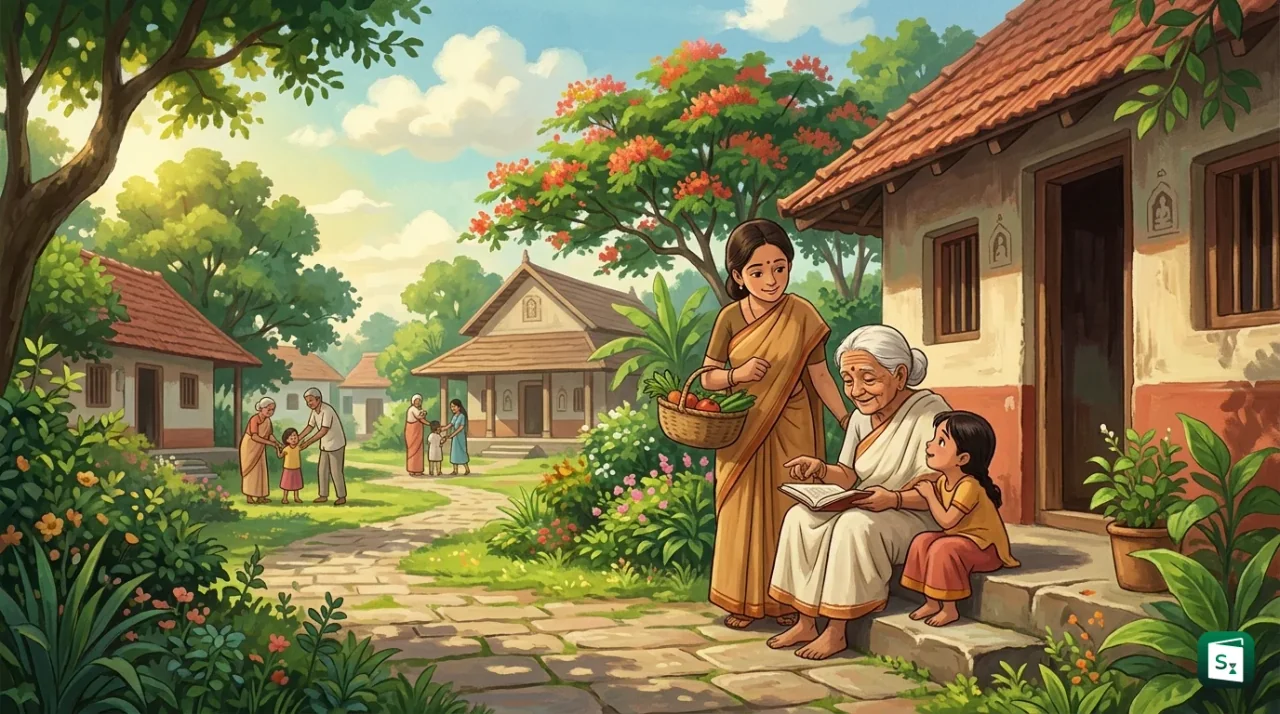
Intergenerational bonding means building strong, caring and respectful relationships between different generations within a family and community, especially between grandparents, parents and children. The Creating Intergenerational Bonding initiative is a nationwide programme that uses the school system to bring these three generations together through structured, play-based and evidence-informed activities.
The MoU was signed at the Ramakrishna Mission in New Delhi, with Union Minister for Social Justice and Empowerment Dr. Virendra Kumar, Minister of State Shri B. L. Verma, Joint Secretary Shri Sajeesh Kumar N. and Director Ms. Kajal Singh representing DoSJE, and Swami Sarvalokananda, Secretary of the Ramakrishna Math and Ramakrishna Mission, representing RKM. The signing reaffirmed the government’s commitment to respect for elders and inclusive development, echoing the vision of Sabka Saath, Sabka Vikas being complete only when every generation moves forward together.
Under the initiative, the core idea is simple but powerful. Elders pass on wisdom and cultural values, parents bridge tradition and modernity, and children grow up rooted in culture while feeling emotionally secure. At the signing ceremony, Dr. Virendra Kumar described families as the foundation of society and said the collaboration would help children, parents and grandparents rediscover togetherness, adding that when every generation walks together, the nation moves forward. Shri B. L. Verma said the initiative would create a replicable school-based model that brings three generations closer, while Swami Sarvalokananda noted that the Mission believes in service through education and character building and is glad to help families value the wisdom of elders.
How Will the Initiative Be Implemented?
The initiative is designed as a structured, research-backed and scalable school-based programme. It will not be a one-time event but a phased model that moves from study and design to testing, training and national rollout, with independent evaluation to guide future expansion.
Research and Design of Co-Learning Games
The first phase focuses on understanding real challenges. The MoU provides for qualitative research into the intergenerational challenges faced by modern families through studies covering 50 representative schools across four regions of the country. Based on these findings, the team will design, pilot-test and finalise 20 evidence-based Co-Learning Games for use in schools.
These games are not ordinary classroom games. They are co-learning tools where children, parents and grandparents learn and play together. The design will be led by the Ramakrishna Math and Ramakrishna Mission as the implementing partner, supported by a dedicated Knowledge Development Partner that will assist with research, design and assessment. This ensures the games are age-appropriate, culturally rooted and backed by evidence on child development, family bonding and elder well-being.
Training, Resource Support and National Rollout
The second phase turns the design into action in schools. A bilingual Resource Centre website in English and Hindi will be developed to support teachers in conducting sessions. This digital centre will host session plans, game instructions, training materials and guidance for engaging families.
Alongside the website, the programme includes certification training for teachers who will lead the sessions. Once trained, teachers will roll out the Co-Learning Game sessions across 200 pilot schools nationwide. The pilot will test how the games work in different regional, linguistic and school settings and how they affect emotional bonding, respect for elders and classroom culture.
The final step is learning and scaling. An independent assessment study will evaluate outcomes from the pilot schools and inform the future scale-up across India. The overall approach is to create a sustainable and replicable model that can be expanded after the pilot, sustained through schools and adapted to local contexts.
Who Are the Partners Behind the Initiative?
The Department of Social Justice and Empowerment
The Department of Social Justice and Empowerment (DoSJE) is the nodal department for the welfare of senior citizens in India. It functions under the Ministry of Social Justice and Empowerment (MSJE), which is responsible for the empowerment of vulnerable groups including Scheduled Castes, Other Backward Classes, senior citizens, transgender persons and victims of substance abuse. The Department implements targeted schemes for social, educational and economic inclusion.
DoSJE articulates its vision for elderly welfare as a society in which senior citizens live a healthy, happy, empowered, dignified and self-reliant life along with strong social and intergenerational bonding. The Ministry is headed by Union Minister Dr. Virendra Kumar, with Shri Ramdas Athawale and Shri B. L. Verma as Ministers of State. The Ministry is headquartered at Shastri Bhawan, New Delhi, and its welfare work for elders is coordinated through the Senior Citizens Welfare Division and platforms such as the Senior Citizens Welfare portal.
An MoU, or Memorandum of Understanding, is a formal agreement between two or more parties that outlines shared goals and cooperation. It is not a law or contract in the strict commercial sense, but it signals intent and defines roles, activities and review mechanisms for a partnership. In this case, it defines how DoSJE and RKM will jointly research, design and deliver the bonding programme through schools.
What Is Ramakrishna Math and Ramakrishna Mission?
The Ramakrishna Math and Ramakrishna Mission (RKM) are twin organisations headquartered at Belur Math in Howrah, West Bengal, on the western bank of the Hooghly River. The Ramakrishna Math is a monastic order founded in 1886 at Baranagar near Kolkata by the monastic disciples of Sri Ramakrishna Paramhansa (1836 to 1886) and headed by Swami Vivekananda (1863 to 1902). The Ramakrishna Mission is a humanitarian organisation founded by Swami Vivekananda on 1 May 1897 to carry out education, health, relief and cultural work.
Though legally distinct, the Math was registered as a trust in 1901 and the Mission as a society in 1909 under Act XXI of 1860, they work as one movement. The elected Trustees of the Math also serve as the Governing Body of the Mission, and the President is the head of both. Their motto, given by Vivekananda, is Atmano mokshartham jagad hitaya cha, which means for one’s own salvation and for the welfare of the world.
Inspired by the teachings of Sri Ramakrishna and Swami Vivekananda and the philosophy of Vedanta, RKM propagates universal harmony and service to humanity as worship. Today it runs a large network of schools, colleges, hospitals, dispensaries and relief centres across India and abroad, and is known for its century-long experience in education, healthcare and character building. It was chosen as the implementing partner for the initiative, with a Knowledge Development Partner providing technical support for research and evaluation.
| Organisation | Founded | Founder | Legal Status | Headquarters | Focus |
|---|---|---|---|---|---|
| Ramakrishna Math | 1886 at Baranagar | Monastic disciples of Sri Ramakrishna, led by Swami Vivekananda | Trust registered in 1901 | Belur Math, Howrah, West Bengal | Spiritual growth and monastic training |
| Ramakrishna Mission | 1 May 1897 | Swami Vivekananda | Society registered in 1909 under Act XXI of 1860 | Belur Math, Howrah, West Bengal | Humanitarian service, education, health and relief |
Why Is Intergenerational Bonding Important for India Today?
India is home to both the world’s largest youth population, with over 365 million persons aged 15 to 29, and a rapidly growing elderly population. As per Census 2011, India had 10.38 crore senior citizens, defined as persons aged 60 years and above, up from 1.98 crore in 1951 and 7.6 crore in 2001. This number is projected to rise to about 19 percent of the population by 2050. Longer life expectancy due to better healthcare means more Indians will live longer, but family structures are changing at the same time.
Urbanisation, migration, nuclear families, busy work schedules and digital lifestyles have reduced daily interaction between grandparents and grandchildren. National studies, including the HelpAge India Intergenerational Bonds (INBO) Report released ahead of World Elder Abuse Awareness Day on 15 June, found that youth and elders both acknowledge a generation gap, with busy schedules cited by 76 percent of elders and 74 percent of youth as a barrier to interaction. Youth often associate elders with being lonely or dependent, while also respecting them as wise and respected, which shows both affection and distance.
Intergenerational bonding directly addresses these gaps. When children spend structured time with grandparents and parents in co-learning settings, they build emotional security, cultural rootedness and respect for elders. Elders gain active engagement, a sense of purpose and opportunities to share knowledge, which supports mental well-being and reduces loneliness. Parents are supported in managing the balance between traditional values and modern pressures. For schools, such programmes build empathy, character and social harmony alongside academic learning.
This is also why social harmony is linked to social justice. Social justice in the Indian context means creating a fair society where all groups, including the most vulnerable like senior citizens, have equal opportunity, dignity and protection. Reducing age-based isolation and strengthening family support are therefore not just cultural goals but part of welfare and inclusion.
Link to India’s Senior Citizen Welfare Ecosystem
The new initiative does not stand alone. It builds on a larger set of laws and schemes for elderly welfare that the Ministry of Social Justice and Empowerment already implements.
The most important legal protection is the Maintenance and Welfare of Parents and Senior Citizens Act, 2007. This Act, initiated by the Ministry of Social Justice and Empowerment, requires children and, in the case of childless senior citizens, legal heirs to provide maintenance to parents and senior citizens who cannot support themselves. It provides for Maintenance Tribunals, allows applications by the senior citizen or an authorised person or organisation, and expects disposal within 90 days, extendable by 30 days. It allows the Tribunal to order a monthly allowance up to ₹10,000, mandates that every district have at least one old age home for a minimum of 150 indigent seniors, ensures separate queues and beds for senior citizens in government hospitals and geriatric care facilities, and makes abandonment of a senior citizen punishable with imprisonment up to three months or fine up to ₹5,000.
The central umbrella scheme for senior citizens is the Atal Vayo Abhyuday Yojana (AVYAY), which was restructured to improve the quality of life for elders. One major component is the Integrated Programme for Senior Citizens (IPSrC), which provides grant-in-aid to voluntary organisations to run Senior Citizen Homes, Continuous Care Homes, Mobile Medicare Units, Physiotherapy Units and Regional Resource and Training Centres (RRTCs). Another is the Rashtriya Vayoshri Yojana (RVY), which provides assisted living devices such as walking sticks, hearing aids and wheelchairs to seniors below the poverty line who suffer from age-related disabilities, helping restore near normalcy in daily life. The Senior Citizens Welfare Fund, created under the Finance Act, 2015, funds schemes for senior citizen welfare in line with the National Policy on Older Persons, 1999 and the National Policy on Senior Citizens. Support structures include Elderline, the national helpline for senior citizens on toll free number 14567, available from 8 am to 8 pm seven days a week, and the SACRED portal for re-employment of persons above 60 and SAGE for senior care services.
Creating Intergenerational Bonding complements these welfare measures by adding a preventive and family-based layer. While AVYAY and the 2007 Act respond to care, maintenance and emergency needs, the school-based bonding model works upstream to keep families connected, reduce isolation before it becomes neglect, and make respect for elders a lived daily practice rather than only a legal duty.
The Way Forward
The immediate next step is execution in the pilot phase. The research across 50 schools, finalisation of 20 games, teacher certification and launch of the bilingual Resource Centre will decide how practical and engaging the model is across different regions and school types. The rollout to 200 pilot schools will generate real data on participation, intergenerational interaction and well-being outcomes.
The independent assessment built into the MoU is key. Its findings will show which games, session designs and training methods work best and where changes are needed before a wider scale-up. If the pilot shows strong results, the government and RKM can expand the framework to more schools, integrate it with existing school activities and link it with community centres and senior citizen associations.
Over the longer term, the initiative points to a shift in how elderly welfare is imagined in India. Rather than treating care for seniors only as support services or legal protection, it frames it as shared living, shared learning and shared culture across three generations. Success will depend on sustained teacher motivation, active participation by parents and grandparents, and steady technical support from the Knowledge Development Partner and the Ministry’s senior citizen institutions.
Key Takeaways
- DoSJE signed an MoU with Ramakrishna Math and Ramakrishna Mission on 1 September 2026 in New Delhi for the Creating Intergenerational Bonding initiative.
- The initiative aims to strengthen bonds between children, parents and grandparents through play-based, evidence-informed activities delivered through the school system.
- The MoU covers qualitative studies in 50 representative schools across four regions and design of 20 Co-Learning Games, with rollout in 200 pilot schools nationwide.
- A bilingual English-Hindi Resource Centre website and teacher certification training will support delivery, followed by an independent assessment study to guide national scale-up.
- Ramakrishna Math was founded in 1886 at Baranagar and Ramakrishna Mission on 1 May 1897 by Swami Vivekananda, both headquartered at Belur Math, Howrah, West Bengal.
- The programme builds on the Atal Vayo Abhyuday Yojana (AVYAY) ecosystem and complements the Maintenance and Welfare of Parents and Senior Citizens Act, 2007, which mandates maintenance, district old age homes and the Elderline helpline 14567.