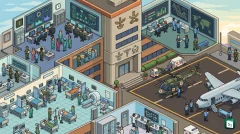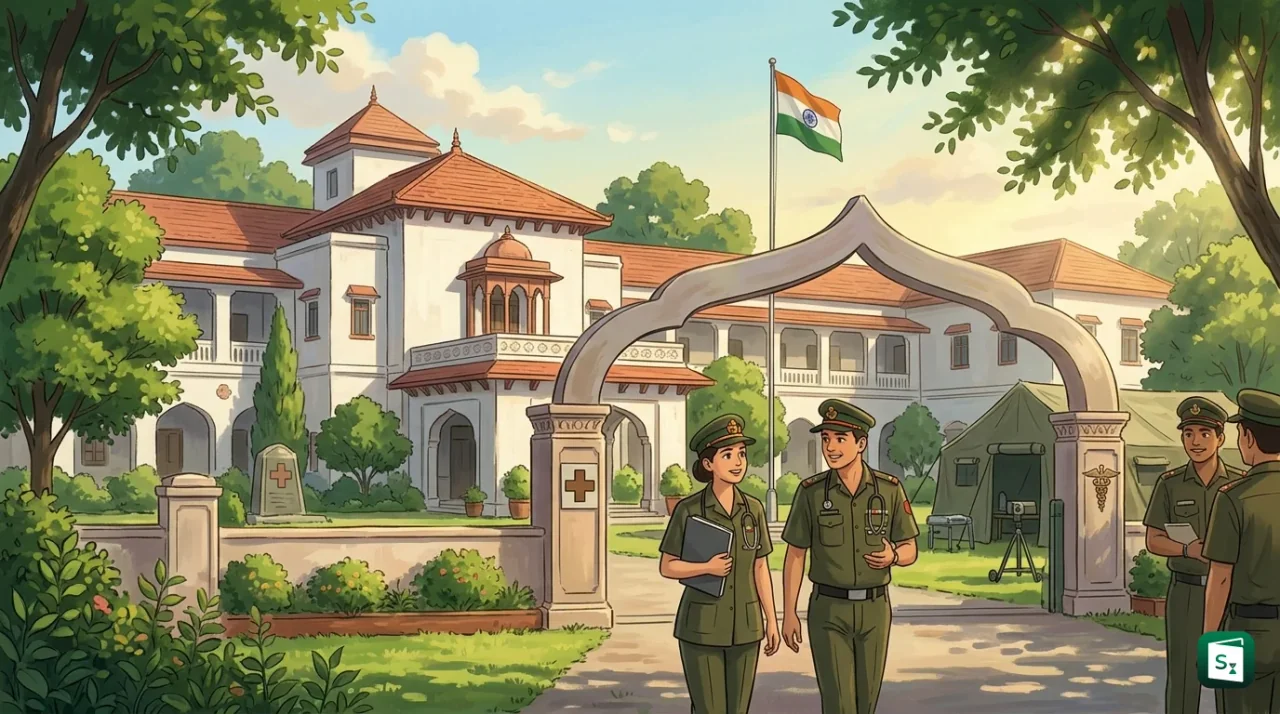
Union Defence Minister Rajnath Singh virtually inaugurated the Department of Military Medicine at the Command Hospital (Central Command) in Lucknow, Uttar Pradesh, on 29 July 2026. It is the first dedicated academic and operational department in India focused exclusively on military medicine, established under the Directorate General of Medical Services (DGMS) of the Indian Army. The department is expected to give the Armed Forces Medical Services a modern, research-driven hub for combat medical care and emerging threats.
What Is Military Medicine?
Military medicine is the branch of medicine that deals with the prevention, diagnosis, treatment and evacuation of injuries and illnesses in military settings. It covers combat casualty care, field surgery, trauma management, preventive medicine and medical support during operations and disasters.
The Defence Minister drew a useful comparison while announcing the department. Just as aerospace medicine studies the physical and mental stresses faced by pilots and astronauts, military medicine examines how the human body responds to the strains of war and war-like situations. Indian soldiers serve in some of the world’s harshest environments, from the freezing heights of the Himalayas to heat-soaked deserts, and face a wide range of threats including infectious diseases, heat and cold injuries, high-altitude illness, fatigue, nutritional problems and dehydration. The new department is meant to build medical protocols tailor-made for these operational realities, rather than copying civilian medical practice.
Why the Command Hospital in Lucknow
The choice of Lucknow is significant on several counts. Command Hospital (Central Command) is one of the seven Command Hospitals of the Indian Armed Forces, the top-tier referral hospitals of the military medical system. It is the largest hospital of the Indian Army’s Central Command, which was re-raised on 1 May 1963 after the Sino-Indian War of 1962, with its headquarters at Lucknow.
The hospital is among the busiest in the armed forces. It functions as a tertiary care referral hospital for 22 Military Hospitals, two Air Force hospitals and 109 Ex-Servicemen Contributory Health Scheme (ECHS) polyclinics. It serves more than 3.5 lakh dependents spread across six states of central India as well as Nepal, receives nearly 2,000 outpatients and 40 to 50 emergencies on a regular basis, and its bed occupancy routinely crosses 80 per cent. It also houses a Malignant Disease Treatment Centre for cancer patients and trains interns, post-graduate trainees, Military Nursing Service cadets and nursing assistants.
The location also gives the department a ready pool of patients, specialists and training facilities. A new multi-specialty greenfield Command Hospital with 780 inpatient beds and 100 crisis expansion beds is being built in Lucknow at an estimated cost of ₹496.94 crore, signalling the city’s growing role in the military healthcare network.
The Institutional Framework Behind the Department
The department operates under the Directorate General of Medical Services (Army), which is the Army arm of the Armed Forces Medical Services (AFMS). AFMS is the tri-service medical organisation of the Indian Armed Forces, responsible for medical support to the Army, Navy and Air Force through a network of hospitals, field medical units and training institutions. The Director General Armed Forces Medical Services (DGAFMS) heads this organisation and acts as the medical adviser to the Chief of Defence Staff and the Defence Ministry.
AFMS and the Army Medical Corps
AFMS draws its personnel from three main components: the Army Medical Corps (AMC) for doctors, the Army Dental Corps for dentists, and the Military Nursing Service (MNS) for nurses. The Army Medical Corps, formed on 3 April 1943 during the Second World War by merging the Indian Medical Service, the Indian Medical Department and the Indian Hospital Corps, has a lineage stretching back to the medical services of the East India Company in 1764. After independence the corps was renamed the Army Medical Corps, and its senior most officer also holds the ceremonial title of Colonel Commandant.
The DGMS (Army) post has its own significance. Lieutenant General Sadhna Saxena Nair became the first woman to hold the position on 1 August 2024, and the current incumbent, Lieutenant General C. G. Muralidharan, also serves as Colonel Commandant of the Army Medical Corps. Separately, Surgeon Vice Admiral Arti Sarin became the first woman to head the entire AFMS as DGAFMS on 1 October 2024.
The Training Base at AFMC Pune
Formal military medical education in India is anchored at the Armed Forces Medical College (AFMC) in Pune, established on 1 May 1948 on the recommendation of the B. C. Roy Committee. AFMC trains medical undergraduates and post-graduates for the three services and is regarded as one of India’s premier medical institutions. The new department in Lucknow is intended to complement AFMC by becoming the principal academic, research and doctrinal hub of AFMS for military medicine in particular.
What the Department Will Focus On
The department will be developed in a phased manner. The initial phase focuses on establishing academic programmes, followed by the creation of Centres of Excellence in HADR and CBRNe medicine, and finally its evolution into a nationally and internationally recognised centre for military medicine. HADR stands for Humanitarian Assistance and Disaster Relief, while CBRNe refers to chemical, biological, radiological, nuclear and explosive threats.
The department will work across eight core disciplines:
| Discipline | What It Covers |
|---|---|
| Military Trauma and Damage Control | Emergency surgery and stabilisation of battlefield injuries |
| Combat Psychiatry and Resilience | Mental health of soldiers in conflict and high-stress operations |
| Environmental and Operational Medicine | Health effects of extreme climates, high altitude and field conditions |
| Military Medical Logistics | Supply, evacuation and management of medical assets in operations |
| CBRNe Medical Response | Treatment and management of chemical, biological, radiological and nuclear threats |
| Emergency Medicine and Critical Care | Acute care for critically injured personnel |
| Disaster Medicine | Medical response to natural and man-made disasters |
| Humanitarian Assistance and Disaster Relief | Medical support for HADR operations at home and abroad |
It will also support research, audit and data analytics, and promote innovation in technology-enabled battlefield medicine through simulation-based training, telemedicine, prolonged field care and AI-enabled medical decision support. Postgraduate programmes in combat medicine, combat surgery and trauma care are planned, opening a structured career pathway for doctors of the Army Medical Corps in super-specialisation.
Why This Matters
The department addresses a long-standing gap in India’s defence medical system. Military medicine has historically been taught and practised inside various military hospitals and institutions, but without a single dedicated academic and operational hub. Consolidating these functions under one roof will improve combat medical readiness, advance indigenous research and help develop doctrines suited to India’s own terrain and operational needs.
Preparing for Emerging Threats
The threat landscape has widened beyond conventional warfare. The Defence Minister stressed that alongside traditional weaponry, the threat of weapons of mass destruction persists, whether through chemical agents, biological warfare or radiological dispersal devices. The department is expected to serve as a research and development hub for these emerging threats, building the capacity to treat soldiers exposed to CBRNe hazards and to manage mass casualties.
Preventive Healthcare as First Line of Defence
Rajnath Singh made a strong case for treating preventive healthcare as the first line of defence, before treatment begins. He called for using artificial intelligence, wearable devices, predictive analytics and advanced diagnostics to monitor soldiers’ health in real time and detect risks early through disease surveillance, vaccination, sanitation, nutrition, physical fitness, occupational health and regular health screenings. Since preventive care keeps soldiers fit for duty, it is directly linked to combat readiness and national security.
India’s Global Military Role
India is one of the largest contributors to United Nations peacekeeping missions, having deployed more than 2.9 lakh personnel across over 50 missions since the 1950s, and its forces routinely lead HADR operations beyond national borders. The new department is expected to strengthen expertise in disaster response, field hospital deployment, mass casualty management and epidemic control, all of which directly support these peacekeeping and humanitarian commitments.
Fit with the Bigger Vision
The department is aligned with the government’s push for indigenous capability and complements the proposed Global Military Medicine Centre under the Raksha Strategy Vision 2026-30, a medium-term roadmap for strengthening the operational preparedness and modernisation of the armed forces and the AFMS. It is part of a wider transformation of AFMS into a modern, technology-enabled and patient-centric military healthcare system.
The Way Forward
The department’s success will depend on how its phased rollout translates into tangible capability. The immediate focus is on establishing academic programmes and postgraduate courses, which will take time to produce their first cohort of super-specialists. The planned Centres of Excellence in HADR and CBRNe medicine will then give the armed forces dedicated institutions for research and training in two of the most demanding areas of military medicine.
Rajnath Singh described the department as a symbol of a revolutionary shift in the military mindset of the nation and called for transforming it into the world’s best Battlefield Medicine Research Centre. If realised, the department would not only strengthen the health and morale of Indian soldiers, but also raise India’s standing in international military medical research. The inauguration, held at the Army Medical Corps’ historic heartland of Lucknow, is best seen as the opening step in a longer journey toward self-reliance in military medicine.
Key Takeaways
- Union Defence Minister Rajnath Singh virtually inaugurated India’s first dedicated Department of Military Medicine at the Command Hospital (Central Command), Lucknow, on 29 July 2026.
- The department is established under the Directorate General of Medical Services (Army) of the Armed Forces Medical Services (AFMS), the tri-service medical organisation of the Indian Armed Forces.
- It will focus on military trauma, combat psychiatry, environmental and operational medicine, military medical logistics, CBRNe medical response, emergency and critical care, disaster medicine and HADR.
- CBRNe refers to chemical, biological, radiological, nuclear and explosive threats, while HADR stands for Humanitarian Assistance and Disaster Relief.
- The department will be developed in phases, starting with academic programmes, then Centres of Excellence in HADR and CBRNe medicine, and eventually a nationally and internationally recognised hub.
- The Armed Forces Medical College (AFMC) in Pune, established on 1 May 1948 on the recommendation of the B. C. Roy Committee, is the anchor institution for formal military medical education in India.
- The initiative complements the proposed Global Military Medicine Centre under the Raksha Strategy Vision 2026-30.