The United Nations Day for South-South Cooperation is observed each year on 12 September to celebrate solidarity and practical collaboration among developing countries of the Global South. In 2026 the observance, commemorating the Buenos Aires Plan of Action of 1978, is being held under the theme “Solidarity Rising: Global Alliance for Inclusive and Innovative Development” with a high-level panel at United Nations Headquarters in New York on 11 September 2026. The day highlights how sharing knowledge, technology and resources within the South, often with support from traditional partners, can accelerate progress toward the Sustainable Development Goals.
What Is South-South Cooperation?
What is South-South cooperation? South-South cooperation is a solidarity-based process where two or more developing countries of the Global South share knowledge, skills, resources, technology and experience to meet individual or collective development goals. It is country led, respects sovereignty and equality, involves no conditionalities, and complements rather than replaces North-South cooperation.
The United Nations defines South-South cooperation as a common endeavour of peoples and countries of the South born out of shared experiences and sympathies. It is guided by principles of respect for national sovereignty and ownership, equality, non-conditionality, non-interference in domestic affairs and mutual benefit. Operationally, it covers exchanges of technical know-how as well as regional and interregional collective actions.
Such cooperation involves diverse actors beyond governments. Partnerships may include regional organizations, civil society, academia and the private sector, working within and across regions for mutual benefit. It covers areas such as renewable energy, digital innovation, public health, sustainable agriculture, disaster preparedness, education and public services. The Global South in this context refers to developing countries in Africa, Asia, Latin America and the Caribbean and parts of Oceania, which together include about 134 countries and nearly 80 percent of the world’s population.
South-South cooperation is not aid in the traditional donor-recipient sense. It emphasizes national and collective self-reliance, adaptation of solutions to local contexts, and pooling of complementary capacities. The approach gained sharper relevance after the adoption of the 2030 Agenda for Sustainable Development in 2015, where South-South and triangular cooperation were recognized as important means of implementation for the 17 Sustainable Development Goals.
International Day for South-South Cooperation: Date, History and UN Mandate
The International Day for South-South Cooperation, also called the United Nations Day for South-South Cooperation, is observed on 12 September each year. The United Nations General Assembly observes the day to raise awareness of the economic, social and political ties among developing countries and to promote the value of sharing practical solutions within the South.
The formal history of the observance involves two steps. In 2003, the General Assembly in resolution 58/220 decided to declare 19 December as the United Nations Day for South-South Cooperation, choosing the date on which it had endorsed the Buenos Aires Plan of Action in 1978 under resolution 33/134. The first observance was held in 2004. Later, in 2011, through resolution 66/219, the Assembly moved the date to 12 September to mark the actual adoption of the Buenos Aires Plan of Action on 12 September 1978 at the United Nations Conference on Technical Cooperation among Developing Countries.
Since then, the United Nations Office for South-South Cooperation (UNOSSC) convenes the main global observance. In 2026, the high-level panel discussion titled “Solidarity Rising: Global Alliance for Inclusive and Innovative Development” is scheduled for 11 September 2026 at United Nations Headquarters in New York, a day before the formal International Day, to launch the new Global Alliance for South-South and Triangular Cooperation. The observance each September coincides with the opening of the United Nations General Assembly high-level week, giving it strong visibility among heads of state and ministers.
How the Day Is Observed
| Year | Milestone |
|---|---|
| 1978 | Adoption of Buenos Aires Plan of Action on 12 September in Buenos Aires, Argentina |
| 2003 | General Assembly declares 19 December as UN Day for South-South Cooperation through resolution 58/220 |
| 2004 | First observance held on 19 December |
| 2011 | Date shifted to 12 September through resolution 66/219 to align with BAPA adoption date |
| 2019 | BAPA+40, the Second High-level UN Conference on South-South Cooperation, held in Buenos Aires to review 40 years of progress |
| 2026 | Observance under theme “Solidarity Rising: Global Alliance for Inclusive and Innovative Development” with launch of Global Alliance |
Observance is led by UNOSSC, hosted by the United Nations Development Programme (UNDP) since 1974 and headquartered at 304 East 45th Street, New York. Guidance comes from the General Assembly and its subsidiary body, the High-level Committee on South-South Cooperation, which meets periodically to review policy and set directions.
The Historical Roots: Buenos Aires Plan of Action of 1978
The Buenos Aires Plan of Action (BAPA) for Promoting and Implementing Technical Cooperation among Developing Countries is the foundational policy document for South-South cooperation. It was adopted on 12 September 1978 at the end of the United Nations Conference on Technical Cooperation among Developing Countries (TCDC), held in Buenos Aires, Argentina from 30 August to 12 September 1978, with participation of 138 states. The General Assembly endorsed BAPA later that year in resolution 33/134.
Before BAPA, the groundwork had been laid in stages. The United Nations Economic and Social Council set up the first UN technical aid programme in 1949. Newly independent Asian and African states met at the Bandung Conference in Indonesia in 1955 and formed the Afro-Asian Group at the UN. In 1964, the United Nations Conference on Trade and Development (UNCTAD), headquartered in Geneva, Switzerland, was created, and the Group of 77 (G-77) was formed to give developing countries a collective negotiating voice. The United Nations Development Programme (UNDP) was established in 1965 by merging earlier technical assistance programmes. In 1972, the General Assembly created a Working Group on TCDC, which recommended a special unit to promote such cooperation.
BAPA built on these steps and gave South-South cooperation a clear framework. It identified 38 recommendations organized around 15 focal areas and stressed special attention to Least Developed Countries, Landlocked Developing Countries and Small Island Developing States. It also distinguished two related ideas that are still used today, Technical Cooperation among Developing Countries (TCDC), meaning sharing of skills and expertise, and Economic Cooperation among Developing Countries (ECDC), meaning cooperation in trade, finance, investment and production.
The basic objectives set out in BAPA remain the reference point for all later documents. These include fostering national self-reliance by enhancing creative capacity to find home grown solutions, promoting collective self-reliance through exchange of experiences and pooling of technical and other resources, strengthening joint capacity to identify and analyze development problems and formulate strategies, increasing the quantity and quality of international development cooperation by pooling capacities, building technological capacities and improving absorption and adaptation of technology, expanding communication to create new knowledge and wider access to experience, responding to the special needs of Least Developed Countries, Landlocked Developing Countries, Small Island Developing States and crisis affected states, and enabling greater participation in international economic activities.
Later milestones reaffirmed BAPA. In 2009, the High-level UN Conference on South-South Cooperation in Nairobi, Kenya produced the Nairobi outcome document, clarifying roles for national governments, regional bodies and UN agencies. In 2019, BAPA+40, the Second High-level United Nations Conference on South-South Cooperation held again in Buenos Aires from 20 to 22 March 2019, adopted the Buenos Aires outcome document, calling for more systematic and scaled-up cooperation to meet the Sustainable Development Goals amid changing global political and economic conditions.
What Is South-South and Triangular Cooperation?
What is South-South and triangular cooperation? South-South and triangular cooperation, often shortened to SSTC, combines two linked modes. South-South cooperation is exchange directly among developing countries, while triangular cooperation is a Southern-driven partnership between two or more developing countries supported by a developed country or a multilateral organization with finance, technology or expertise.
In practice, triangular cooperation helps Southern partners that have proven solutions but need additional resources to share them with other developing countries. The UNOSSC notes that developed-country partners benefit as well, since they can amplify the impact of their assistance by leveraging strong Southern institutions and networks. Evidence shows that such partnerships increase institutional capacity in the South and make aid disbursements more effective.
Both forms are guided by the same principles, Southern ownership and leadership. Even when a Northern partner or a UN entity provides support, the process is described as Southern-driven and Southern-owned. Examples regularly cited by UN agencies illustrate the model. The Food and Agriculture Organization (FAO) and China jointly run the FAO-China South-South Cooperation Programme, which has supported agricultural productivity, poultry farming and food security in Africa and among Community of Latin American and Caribbean States (CELAC) members, reaching thousands of smallholders. The India, Brazil and South Africa Facility for Poverty and Hunger Alleviation (IBSA Fund), the India-United Nations Development Partnership Fund and the Pérez-Guerrero Trust Fund for South-South Cooperation (PGTF) finance concrete projects managed through UNOSSC trust funds. The World Food Programme (WFP), UNCTAD and UN Industrial Development Organization (UNIDO), headquartered in Vienna, Austria, each run dedicated South-South portfolios linking expertise from countries such as India, Brazil, China, Indonesia, Malaysia, Rwanda and Morocco.
South-South Cooperation vs North-South and Triangular Cooperation
| Feature | South-South Cooperation | Triangular Cooperation | North-South Cooperation |
|---|---|---|---|
| Partners | Two or more developing countries | Two or more developing countries plus a developed country or multilateral body | Developed country supporting a developing country |
| Driving force | Southern-owned, solidarity based | Southern-driven, supported by Northern or multilateral partner | Provider-driven, often tied to official development assistance |
| Principles | Sovereignty, equality, non-conditionality, mutual benefit | Same Southern principles, with shared support | Often involves conditionalities and donor frameworks |
| Focus | Adaptation of context-relevant solutions within the South | Scaling Southern solutions with additional finance or technology | Transfer of finance and technical models from North to South |
| Institutional anchor | UNOSSC and G-77 | UNOSSC, UNDP and donor agencies | Organisation for Economic Co-operation and Development (OECD) and bilateral donors |
Institutional Architecture: UNOSSC, the High-Level Committee and the Global Alliance
The United Nations Office for South-South Cooperation (UNOSSC) is the central UN body for this agenda. It was first created in 1974 as a Special Unit within UNDP to promote technical cooperation among developing countries, following General Assembly resolution 3251 (XXIX). With the endorsement of BAPA in 1978, its mandate was strengthened. The unit was renamed the Special Unit for South-South Cooperation (SU/SSC) in 2004 and finally became the United Nations Office for South-South Cooperation in 2013 under General Assembly resolution 67/227, after a decision of the 17th session of the High-level Committee on South-South Cooperation in 2012.
UNOSSC is hosted by UNDP and receives policy direction from the General Assembly and the High-level Committee on South-South Cooperation, the main intergovernmental body for policy review. Its Strategic Framework, presented every four years to the Executive Board of UNDP, UN Population Fund (UNFPA) and UN Office for Project Services (UNOPS), for 2026 to 2029 focuses on three outcomes, strengthening strategic leadership, building a functional alliance that catalyzes country-owned solutions, and equipping member states to close Sustainable Development Goal gaps through relevant solutions and innovative finance.
Core catalytic roles of UNOSSC include acting as a global focal point and impartial convener, an alliance hub and strategic manager, a thought leader and knowledge broker that leverages digital tools and artificial intelligence, and a catalytic finance and resource innovator that manages trust funds. Key funds under its management are the United Nations Fund for South-South Cooperation, the Pérez-Guerrero Trust Fund (PGTF) established in 1983, the IBSA Fund and the India-UN Development Partnership Fund.
Two system-wide tools frame UN action. The United Nations System-wide Strategy on South-South Cooperation for Sustainable Development (2020 to 2024), prepared by UNOSSC with more than 30 UN entities, provides policy orientation for coherent system-wide work. In 2022, UNOSSC issued Guidelines for Integrating South-South and Triangular Cooperation into United Nations Sustainable Development Cooperation Frameworks, helping UN Resident Coordinators and UN Country Teams include these modalities in country and regional planning.
A major digital and partnership platform is the South-South Galaxy, launched in 2019 as a global knowledge sharing and partnership brokering tool hosted at southsouth-galaxy.org. It holds a repository of good practices, solutions, experts and partnership opportunities.
The 2026 observance adds a new institutional layer. The Global Alliance for South-South and Triangular Cooperation, to be launched on 11 September 2026, is described as a voluntary, UN-facilitated platform convened by UNOSSC. It aims to connect country priorities with expertise, partnerships and catalytic support so that shared experience can become practical action. The Alliance offers four functions, connecting partners by linking needs with expertise, scaling proven local innovations to regional and global levels, supporting implementation through technical exchanges and pilot initiatives, and mobilizing catalytic support such as knowledge, technology and training.
Other important nodes include the High-level Committee on South-South Cooperation, which holds regular sessions in New York, the Finance Center for South-South Cooperation headquartered in Hong Kong, China, the Global Development and South-South Cooperation Fund and South-South Cooperation Assistance Fund (SSCAF) supported by China, and academic hubs such as the Institute of South-South Cooperation and Development (ISSCAD) at Peking University in Beijing, established in 2016.
Why South-South Cooperation Matters Now: Trade, Finance and the SDGs
The significance of South-South cooperation today rests on scale, economic weight and shared vulnerability. Developing countries face interconnected challenges such as climate change, food insecurity, digital divides, financing constraints and debt stress, while at the same time driving a large share of global innovation, trade and investment.
The United Nations notes that South-South trade reached $6.8 trillion in 2025. More than half of exports from developing countries now go to other developing economies, compared with 38 percent three decades ago. Foreign direct investment among developing countries has quadrupled since the 1990s, with their share of global foreign direct investment rising from 9 percent to 32 percent during 2020 to 2023. These figures show why intra-South linkages increasingly shape growth prospects.
At the same time, financial pressure is acute. Developing countries paid a record $921 billion to service external debt in 2024, and about 3.4 billion people live in countries that spend more on interest payments than on health or education, according to UN data presented for the 2026 observance. In this setting, pooling resources and adapting low-cost, context-appropriate Southern solutions can reduce dependence on expensive external models.
For India, South-South cooperation holds direct relevance. India is a long-standing contributor through mechanisms such as the India-UN Development Partnership Fund, the IBSA Fund with Brazil and South Africa, and bilateral programmes with Africa and Southeast Asia in areas such as digital public infrastructure, pharmaceuticals, agriculture and capacity building. Indian initiatives such as the Indian Technical and Economic Cooperation (ITEC) Programme, launched in 1964 by the Ministry of External Affairs, and lines of credit and training offered through UNDP and UNOSSC platforms, exemplify this engagement.
Globally, the cooperation complements multilateral frameworks. It supports Sustainable Development Goal 17 on Partnerships for the Goals, reinforces the Addis Ababa Action Agenda on Financing for Development (2015), and provides practical pathways for countries facing similar agro-climatic conditions or demographic transitions to replicate success. Unlike traditional aid, it is anchored in mutual benefit and non-conditionality, which many developing countries see as more respectful of national ownership.
Theme 2026: Solidarity Rising and Its Significance
The United Nations has announced the theme for 2026 as “Solidarity Rising: Global Alliance for Inclusive and Innovative Development”. The phrase signals two linked ideas, rising solidarity among developing countries and the role of a new institutional vehicle to turn that solidarity into action.
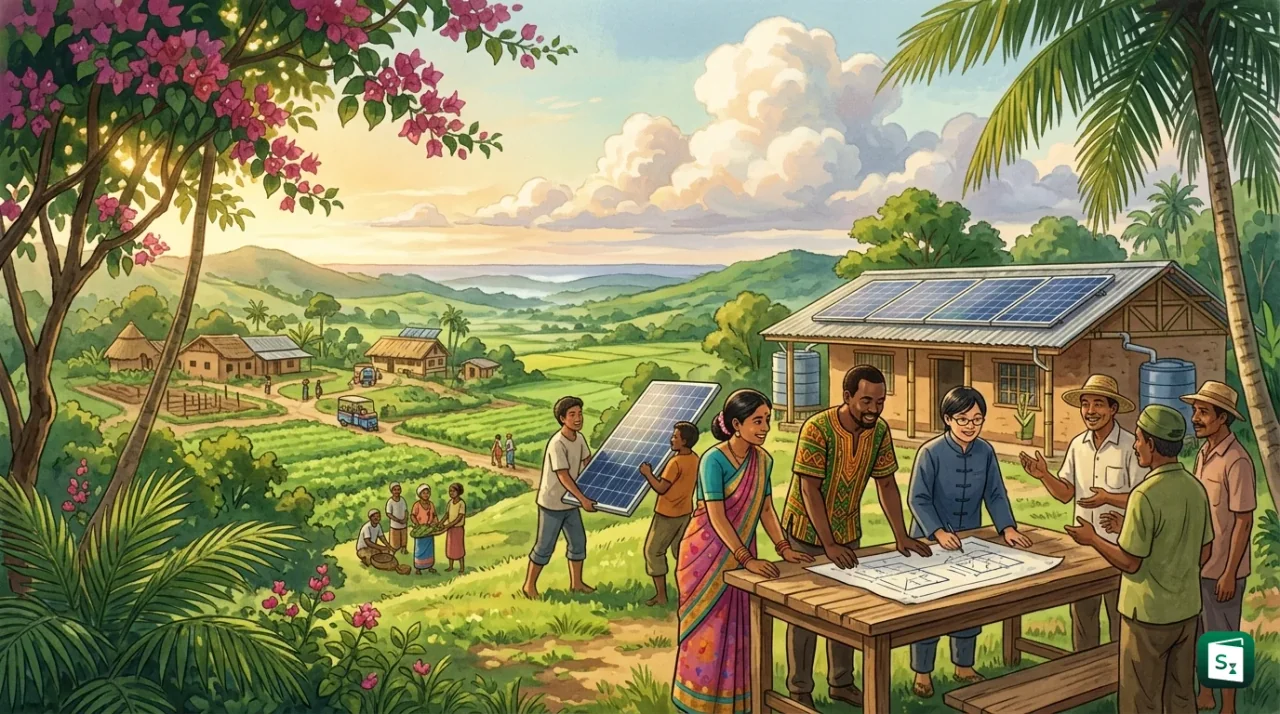
According to the UN and UNOSSC, the theme highlights that many proven solutions already exist across the Global South in renewable energy, digital transformation, public health, sustainable agriculture, disaster preparedness, education and public services, but they often remain fragmented or difficult to access. The Global Alliance for South-South and Triangular Cooperation is designed to bridge that gap by helping countries identify priorities, find relevant expertise, build partnerships and mobilize support across regions and sectors.
Five key messages frame the 2026 campaign. These note that solidarity is rising as countries increasingly turn to each other for practical solutions, that proven solutions already exist and need to be scaled through better connectivity and support, that the Global Alliance will help connect needs with expertise and partnerships, that South-South and triangular cooperation are effective means of implementation for nationally owned Sustainable Development Goal priorities, and that collective action by governments, UN entities, financial institutions, academia, civil society and the private sector can move solutions further and faster.
The launch event on 11 September 2026 at United Nations Headquarters in New York will bring together Member States, UN entities, development partners, financial institutions, academia, civil society and the private sector to showcase partnership opportunities. It will also draw on the Global Report on South-South and Triangular Cooperation 2025, which documents how Southern innovation is addressing complex development challenges. For aspirants noting annual themes, the 2026 theme replaces earlier variations and aligns with the Alliance concept, and it is the primary theme to record for the International Day for South-South Cooperation 2026.
Key Takeaways
- The United Nations Day for South-South Cooperation is observed on 12 September to commemorate the Buenos Aires Plan of Action adopted on 12 September 1978.
- The day was first declared for 19 December in 2003 through General Assembly resolution 58/220 with the first observance in 2004, and later shifted to 12 September in 2011 through resolution 66/219.
- The theme for 2026 is “Solidarity Rising: Global Alliance for Inclusive and Innovative Development”, linked to the launch of the Global Alliance for South-South and Triangular Cooperation on 11 September 2026 at UN Headquarters, New York.
- South-South cooperation is a solidarity-based exchange among developing countries guided by sovereignty, equality, non-conditionality, non-interference and mutual benefit, while triangular cooperation adds support from a developed country or multilateral body.
- The United Nations Office for South-South Cooperation (UNOSSC), created as a Special Unit within UNDP in 1974 and renamed in 2013, is headquartered in New York and serves as the global coordinator for South-South and triangular cooperation.
- South-South trade reached $6.8 trillion in 2025, and South-South foreign direct investment grew from 9 percent to 32 percent of global FDI between 2020 and 2023, showing the growing weight of the Global South which accounts for about 80 percent of world population.