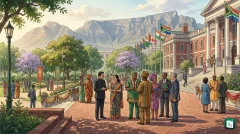
Ramprakash Gopidayal, popularly known as Ramu, died on 5 November 2026 at the age of 70 after an illness. He was cremated on 6 November in Durban. Gopidayal joined the South African Broadcasting Corporation as its first Indian technician in 1980 and later created Impressions, the first television programme for Indians in South Africa.
Who Was Ramprakash Gopidayal?
Ramprakash Gopidayal was a South African media professional of Indian origin. He was widely known as Ramu. Friends and colleagues remember him as an introverted and camera shy man who preferred to work behind the camera.
Gopidayal joined the South African Broadcasting Corporation (SABC) in 1980 as its first Indian television technician. The SABC is the public broadcaster of South Africa. It was set up on 1 August 1936 under an Act of Parliament and is headquartered in Johannesburg. Television broadcasts in South Africa began only in 1976.
Ramu was also a skilled guitarist. He first played with a local group called Luxmi Melodies before he moved into full time broadcasting. Colleagues such as former Radio Lotus manager Fakir Hassen and music producer Tansen Nepaul have described him as a humble visionary and mentor. Brij Maharaj of the South African Hindu Maha Sabha called him an unsung hero who used media to connect generations and protect cultural identity.
How Did Ramu Gopidayal Shape Radio Lotus and Local Music?
Radio Lotus is the radio station of the SABC for South African Indians. It first went on air on 8 January 1983 from studios in Durban. It is now known as Lotus FM. It is the only national radio station in South Africa aimed at Indian listeners.
The station broadcasts mainly in English, which is the home language for most South African Indians. It also carries music and language lessons in five Indian languages. These are Hindi, Tamil, Telugu, Urdu and Gujarati. Its listeners include Hindus, Muslims and Christians.
Gopidayal played a central role in building local music for the station. He helped set up its resident band, Kamal Sungeeth. The first aim was simple. The station had very few recordings by local Indian artists, so the band created a fresh archive for broadcast in all community languages.
The project soon grew much larger. Gopidayal and then station manager Fakir Hassen took Kamal Sungeeth on roadshows across the country. Singers such as Mukesh Harilal, Tansen Nepaul, Sagren Naidoo, Jay Makan and Suresh Nathoo gained a national profile through these tours. Gopidayal later groomed Nepaul to lead the group and become a leading producer of South African Indian music.
Gopidayal also backed the first Indian songwriting competition in South Africa. It invited entries in Hindi, Tamil, Urdu, Gujarati and Telugu. Writers either sang their own songs or had others sing them. Many winners became overnight stars. The contest raised both the quality and the share of home grown music on radio and television.
What Was Impressions and Why Was It Historic?
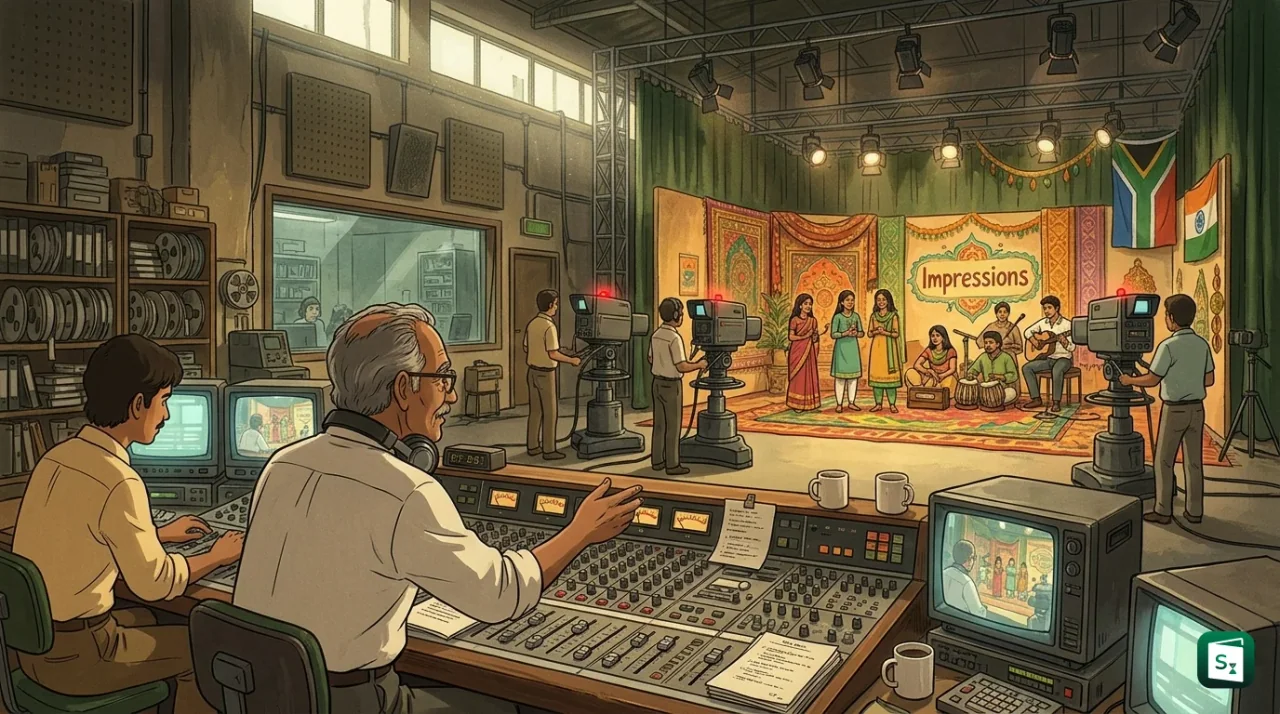
Impressions was a weekly television magazine programme for the Indian community. The SABC started it in 1986, when apartheid was weakening but still in force. Apartheid was the system of racial segregation and white minority rule that governed South Africa from 1948 to 1994.
Gopidayal became the executive producer of Impressions. He had to build the show from scratch. There was no earlier model for an Indian television programme in the country.
The show covered culture, music, news, community stories, fashion and food. It gave local Indian musicians, artists and cultural figures their first regular place on national television. At a time of very limited representation, it also gave young Indian origin women a chance to become presenters and household names.
Gopidayal used his production role to bring Kamal Sungeeth from radio to television. The band performed on Impressions and on special broadcast events. This moved its reach from regional radio listeners to a nationwide television audience.
Impressions ran for 14 years. In 2000 it was reshaped as Eastern Mosaic, which continued as the SABC showcase of Indian life on SABC 2 for many years.
When Did Indians Arrive in South Africa and Why Did They Come?
Indians first arrived in South Africa on 16 November 1860 aboard the ship Truro from Madras. They came as indentured labourers for sugar plantations in Natal. More than 152,000 workers arrived between 1860 and 1911, joined by Gujarati traders who paid for their own passage.
The first group on the Truro numbered 342 men, women and children. A second ship, the Belvedere, arrived from Calcutta ten days later. The labourers signed five year contracts. They worked in harsh conditions on sugar estates in the British colony of Natal. Many chose to stay after their contracts ended. They became market gardeners, hawkers, hotel staff, miners and railway workers.
From the 1870s a second stream arrived. These were free or passenger Indians, mostly Gujarati Muslim and Hindu traders. They paid for their own travel and set up shops and businesses in Natal, Transvaal and the Cape.
Both groups faced severe discrimination. Laws limited their right to own land, trade, move between provinces and use public spaces. Under apartheid, Indians were classified as a separate racial group. The Group Areas Act of 1950 forced them into segregated townships such as Chatsworth and Phoenix near Durban and Lenasia near Johannesburg. Indians were recognised as citizens in 1961, but without full political rights until democracy in 1994.
How Many Indians Live in South Africa Today?
About 1.7 million people of Indian origin live in South Africa today, around 3 percent of the population. The 2022 census counted 1,697,505 people in the Indian or Asian group. About 80 percent live in KwaZulu Natal, with Durban as the largest centre.
The Ministry of External Affairs of India placed the number of overseas Indians in South Africa at 1.8 million in January 2026. This figure includes about 1,722,600 persons of Indian origin and 77,400 non resident Indians. Durban holds one of the largest Indian origin populations of any city outside India.
| Fact | Detail |
|---|---|
| Total Indian origin population | About 1.7 million, around 3 percent of South Africa |
| 2022 census count | 1,697,505 in Indian or Asian group, 2.7 percent of population |
| Main province | KwaZulu Natal, home to about 80 percent of the community |
| Other centres | Gauteng with about 15 percent, then Western Cape around Cape Town |
| Largest city cluster | Durban metro with more than 835,000 Indian origin residents |
| Main languages | English as home language, plus Hindi, Tamil, Telugu, Urdu and Gujarati |
| Main religions | About 41 percent Hindu, 25 percent Muslim and 24 percent Christian |
English is the first language for most South African Indians. The 1996 census found that more than 93 percent reported English as their home language. Cultural life in Durban blends Indian roots with South African life, from temples and mosques to local foods such as bunny chow.
What Did Gopidayal Do After Leaving the SABC?
Gopidayal left the SABC and built a successful business in the mobile phone trade. He ran one of the most successful Vodacom stores in South Africa. Colleagues say he remained grounded and service minded even after his success in business.
He later returned to radio as a volunteer leader in community broadcasting. Gopidayal served for many years as volunteer station manager of Hindvani. Hindvani means Voice of Hindi. It is a community radio station for Hindi listeners based at Chatsworth in Durban.
Hindvani was set up by the Hindi Shiksha Sangh of South Africa in 1998 to mark the school body’s 50th year. The Sangh works to promote the Hindi language and Hindu culture. Hindvani received a long term licence in 2002. It broadcasts on 91.5 FM in Durban and 102.3 FM in Pietermaritzburg, and streams online. All its presenters are volunteers.
Under Gopidayal, Hindvani grew from a small station into a respected community institution. Brij Maharaj said the station informed, educated and connected thousands of listeners across the country. Gopidayal was cremated in Durban after tributes from broadcasters, musicians, business associates and community bodies.
Key Takeaways
- Ramprakash Ramu Gopidayal died on 5 November 2026 at the age of 70 and was cremated in Durban.
- Gopidayal joined the SABC in 1980 as its first Indian television technician.
- Gopidayal created Impressions in 1986, the first TV programme for Indians in South Africa, later reshaped as Eastern Mosaic in 2000.
- Gopidayal co founded the Kamal Sungeeth band for Radio Lotus, which first aired on 8 January 1983 and is now Lotus FM.
- Indians first reached South Africa on 16 November 1860 aboard the Truro, and about 1.7 million people of Indian origin live there today.