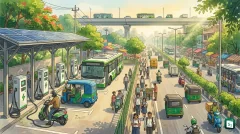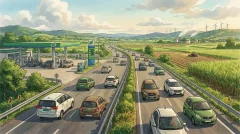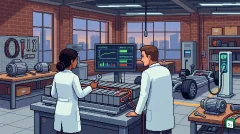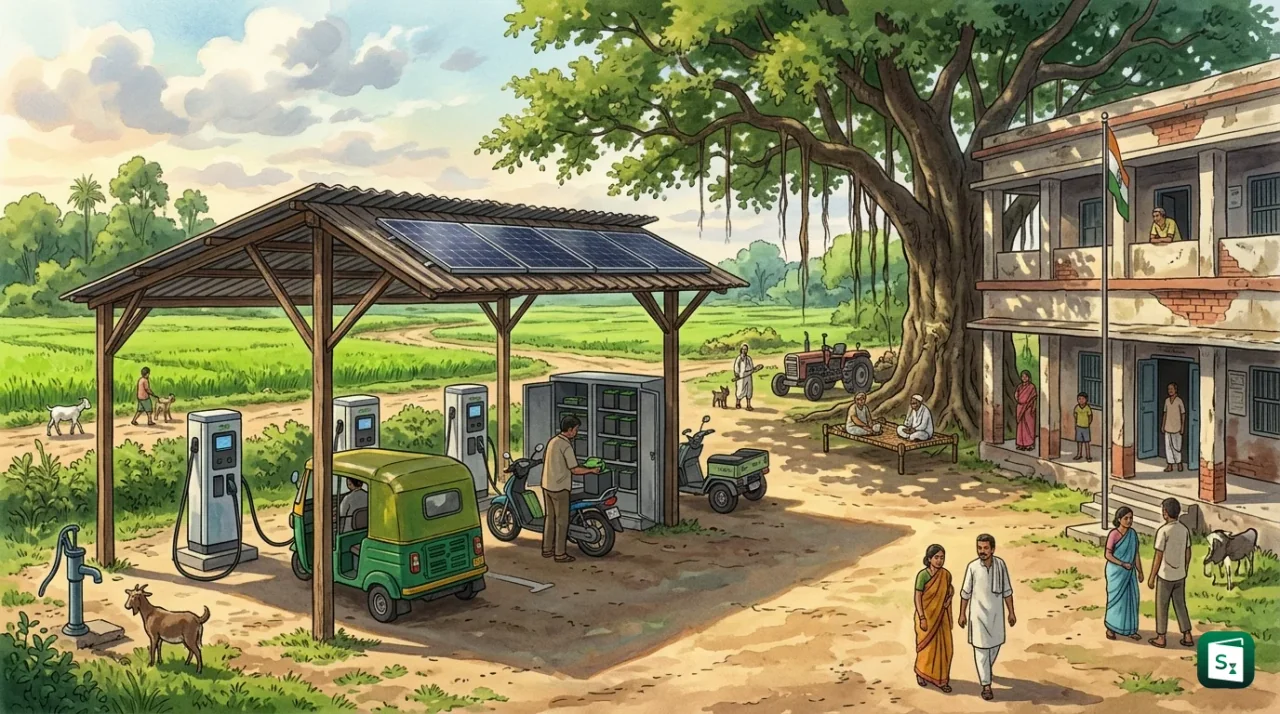
The Ministry of Panchayati Raj signed a Memorandum of Understanding with Convergence Energy Services Limited (CESL) on 30 October 2026 to build electric vehicle charging and battery swapping stations on Panchayat owned land across India. The facilities will serve two wheelers to heavy vehicles and give Gram, Block and District Panchayats new rental income. The pact links rural self governance, green mobility and local finance in one move.
What Does the Panchayati Raj CESL Pact Promise for Rural EV Charging?
The Ministry of Panchayati Raj and CESL exchanged the Memorandum of Understanding in New Delhi on 30 October 2026 during the National Workshop on the People’s Plan Campaign (PPC) 2026-27. The workshop drew more than 400 participants from States and Union Territories and also saw the release of the PPC 2026-27 booklet in English and Hindi.
The exchange took place in the presence of Union Minister for Panchayati Raj Rajiv Ranjan Singh, who also holds the charge of Fisheries, Animal Husbandry and Dairying, and Ministry Secretary Vineet Joshi. The documents were exchanged by Mukta Shekhar, Joint Secretary in the Ministry of Panchayati Raj, and Akhilesh Kumar Dixit, Director of CESL.
The core promise is simple. Panchayats will offer suitable parcels of Panchayat owned land. CESL will help turn that land into public charging and swapping points for electric vehicles. Priority sites include Panchayat premises and locations along State and National Highways where traffic is steady and grid access is feasible.
The network is planned for all vehicle types. It will cater to electric two wheelers, three wheelers including e rickshaws and e carts, four wheelers such as cars, and medium and heavy duty vehicles including buses and trucks. This wide coverage matters because rural highways carry a mix of personal, farm linked and commercial traffic, and long distance EV users need charging points outside cities.
What Is Battery Swapping and How Do EV Charging Stations Work?
Battery swapping is a system in which an EV user exchanges a discharged battery for a fully charged one at a swapping station instead of waiting to recharge the vehicle. EV charging stations are fixed points where a vehicle stays parked and draws power through a plug, using slow AC chargers or fast DC chargers.
In a charging station, power flows from the grid into the battery fitted inside the vehicle. A two or three wheeler may take three to four hours on a slow charger, while fast DC chargers can sharply cut this time for cars and buses. The vehicle must remain parked during the process, so the station needs parking space and a strong power connection.
In battery swapping, charging and driving are separated. Batteries are charged on racks inside the station and then handed to drivers in minutes. The user may buy the vehicle without the battery and pay a regular fee for battery use. This model is called Battery as a Service (BaaS). It lowers the upfront price of the vehicle and removes waiting time, which helps delivery riders, auto drivers and fleet operators who cannot afford long breaks.
| Feature | Plug In Charging Station | Battery Swapping Station |
|---|---|---|
| What happens | Vehicle is parked and charged through a cable | Discharged battery is removed and replaced with a charged one |
| Time taken | From under an hour on fast chargers to several hours on slow chargers | Usually completed in a few minutes |
| Space need | More parking space, as each vehicle stays next to the charger | Less parking space, as batteries are stacked and charged on racks |
| Best suited for | Cars, buses and private users who can park for longer | Two wheelers, three wheelers and commercial fleets that need quick turnaround |
| Cost model | User pays for power used, often per unit | User often pays a subscription fee for battery use under BaaS |
India has tested both routes. The NITI Aayog released a draft battery swapping policy in April 2022 for light electric vehicles, mainly two and three wheelers. It proposed equal incentives for vehicles with fixed and swappable batteries, support for Advanced Chemistry Cell batteries, safety testing, interoperable standards and concessional power tariffs. The Ministry of Power followed with Guidelines for Installation and Operation of Electric Vehicle Charging Infrastructure 2024, which treat setting up a charging station as a delicensed activity and cover both charging and swapping stations.
Who Will Do What Under the MoU?
The Ministry of Panchayati Raj will act as the link between Panchayats and the project. It will work with State Panchayati Raj Departments to identify suitable Panchayat land, help with clearances and monitor progress. This state level coordination is important because Panchayat is a State subject under the Seventh Schedule of the Constitution, and land use rules differ across States.
CESL will handle the technical and commercial work. Its tasks include site assessment, demand aggregation, supply and installation of equipment, testing and commissioning, and operation and maintenance. In short, the Ministry brings land and local support, while CESL brings equipment and operating skill.
| Partner | Main Responsibility |
|---|---|
| Ministry of Panchayati Raj | Coordinate with States, identify and monitor suitable Panchayat sites |
| State Panchayati Raj Departments | Offer land parcels, support local approvals |
| CESL | Assess sites, aggregate demand, install, test, operate and maintain stations |
Convergence Energy Services Limited (CESL) is a wholly owned subsidiary of Energy Efficiency Services Limited (EESL) under the Ministry of Power. It is headquartered in New Delhi and works at the meeting point of renewable energy, electric mobility and climate action. CESL acts as a demand aggregator, which means it combines bulk orders from many buyers to bring prices down.
The company has a track record in public mobility. It has aggregated demand for electric buses, three wheelers and cars under the Faster Adoption and Manufacturing of Hybrid and Electric Vehicles (FAME) scheme, supported electric bus deployment in cities including Delhi, Surat, Hyderabad and Bengaluru under the PM e-Bus Sewa initiative, and built a public charging network with an app based system to locate and pay at chargers.
Why Panchayat Land and Own Source Revenue Matter for Self Reliant Panchayats
Own Source Revenue (OSR) is the income a Panchayat raises on its own through taxes, fees, rents and user charges. It is different from grants given by the Centre or the State. A Panchayat with higher OSR can fund street lights, water supply, roads and upkeep without waiting for outside help.
Many Panchayats today depend heavily on Finance Commission grants. The Sixteenth Finance Commission has recommended grants of ₹4,35,236 crore for Rural Local Bodies for 2026-27 to 2030-31, with 80 percent as basic grants and 20 percent as performance grants. From 2028-29, Panchayats must show growth in OSR to claim the performance share. This rule makes new income sources urgent.
The CESL pact fits this need. Unused Panchayat land near offices, markets and highways becomes a productive asset. A charging operator pays rent or shares revenue with the Panchayat. That money can recur every month for years and can be used for civic services and upkeep of the station area.
The Ministry has built a support system around this idea:
- The Model Panchayat Tax, Rates and Fees Rules, called the Model OSR Rules, released in July 2026, give States a ready template for property tax, user charges and fees.
- The SAMARTH Panchayat Portal lets Panchayats register taxpayers, raise demand, collect payments online and track collection in real time. Chhattisgarh and Himachal Pradesh have already joined, with more than 51 lakh taxpayers registered.
- The Atmanirbhar Panchayat Programme helps selected Gram and Block Panchayats turn local assets into bankable projects with help from NABARD and HUDCO. The plan is to develop 350 projects over four years.
The Minister has urged Panchayats to raise their own income to match Central support and move toward self reliant and developed Panchayats. EV stations are one such route because they use land already owned by the village, need no large staff and serve a growing market.
How the Pact Fits Into India’s Wider EV Charging Push
India has built its EV policy in stages. FAME I, run from 2015 to 2019 with an outlay of ₹895 crore, supported early adoption. FAME II, run from 2019 to 2024 with an outlay of ₹11,500 crore, supported about 16.72 lakh electric vehicles, deployed more than 5,000 electric buses and funded public charging. Under FAME II, ₹839 crore was kept for charging stations and 9,583 public stations were installed by July 2026.
The current scheme is the PM Electric Drive Revolution in Innovative Vehicle Enhancement (PM E-Drive) Scheme. It was approved by the Union Cabinet in September 2024 and is run by the Ministry of Heavy Industries from April 2024 to March 2028 with a total outlay of ₹10,900 crore.
| Component under PM E-Drive | Target and Funding |
|---|---|
| Demand incentive for e two wheelers, e three wheelers, e trucks and e ambulances | Support for about 28.30 lakh vehicles, including 24.79 lakh e two wheelers and 14,028 e buses |
| Electric buses | ₹4,391 crore for bus deployment, with 14,000 buses already allocated to cities and transport units |
| Public charging stations | ₹2,000 crore for chargers, with a plan for 22,100 fast chargers for cars, 1,800 for buses and 48,400 for two and three wheelers |
By July 2026, proposals for 5,871 chargers across nine States plus 691 chargers of oil marketing companies had been approved under PM E-Drive, but field installation was yet to gather pace. Most existing chargers sit in large cities and on select expressways. Rural highways have very few points, which creates range anxiety for drivers who want to travel between towns.
The Panchayat pact directly addresses this gap. Village land along highways is abundant and cheaper than city land. A station in a Panchayat can serve local e autos and e rickshaws in the day and highway cars and buses at night. Wider rural charging also cuts carbon emissions, improves village air quality, reduces dependence on imported fuel and creates local work in site upkeep, security and small shops around the station.
What Is Panchayati Raj and How Is Rural Planning Organised?
Panchayati Raj is the system of rural local self government in India. The Panchayati Raj System works on the principle that villages should manage local development through elected bodies, with direct participation of residents in the Gram Sabha.
The system gained constitutional status through the Constitution (73rd Amendment) Act, 1992, which came into force on 24 April 1993. The Amendment added Part IX, containing Articles 243 to 243-O, and the Eleventh Schedule with 29 subjects such as agriculture, health, drinking water and rural roads. It gave shape to Article 40, which directs the State to organise Village Panchayats. 24 April is observed every year as National Panchayati Raj Day.
Key features include a three tier structure of Gram Panchayat at the village level, Block Panchayat or Panchayat Samiti at the intermediate level, and District Panchayat or Zila Parishad at the district level. Each Panchayat has a five year term, seats reserved for Scheduled Castes, Scheduled Tribes and women, a State Election Commission to conduct polls and a State Finance Commission every five years to suggest fund sharing.
Planning under this system runs through the People’s Plan Campaign, launched in 2018 as Sabki Yojana Sabka Vikas. From 2 October each year, Ward Sabhas, Mahila Sabhas and Gram Sabhas meet to prepare Gram Panchayat Development Plans for the next financial year. The current campaign prepares plans for 2027-28 and stresses convergence of Central Finance Commission grants, State Finance Commission grants, OSR and scheme funds.
Digital tools support this work. eGramSwaraj, launched on 24 April 2020 by the Ministry of Panchayati Raj, brings planning, accounting, asset mapping and online payments onto one portal and is linked to the Public Financial Management System (PFMS). More than 2.4 lakh Gram Panchayats now prepare plans and make payments through this system. The new EV stations, once built, will be recorded as Panchayat assets in the same system and tracked for income and upkeep.
Key Takeaways
- The Ministry of Panchayati Raj and CESL exchanged the MoU on 30 October 2026 in New Delhi during the PPC 2026-27 workshop.
- The pact plans EV charging and battery swapping stations on Panchayat premises and highway sites for two wheelers to heavy vehicles.
- CESL, a wholly owned subsidiary of EESL under the Ministry of Power, will handle assessment, installation, operation and maintenance.
- The income will strengthen Own Source Revenue, which Panchayats must grow from 2028-29 to claim Sixteenth Finance Commission performance grants.
- The PM E-Drive Scheme, with an outlay of ₹10,900 crore for 2024 to 2028, earmarks ₹2,000 crore for public charging infrastructure across India.