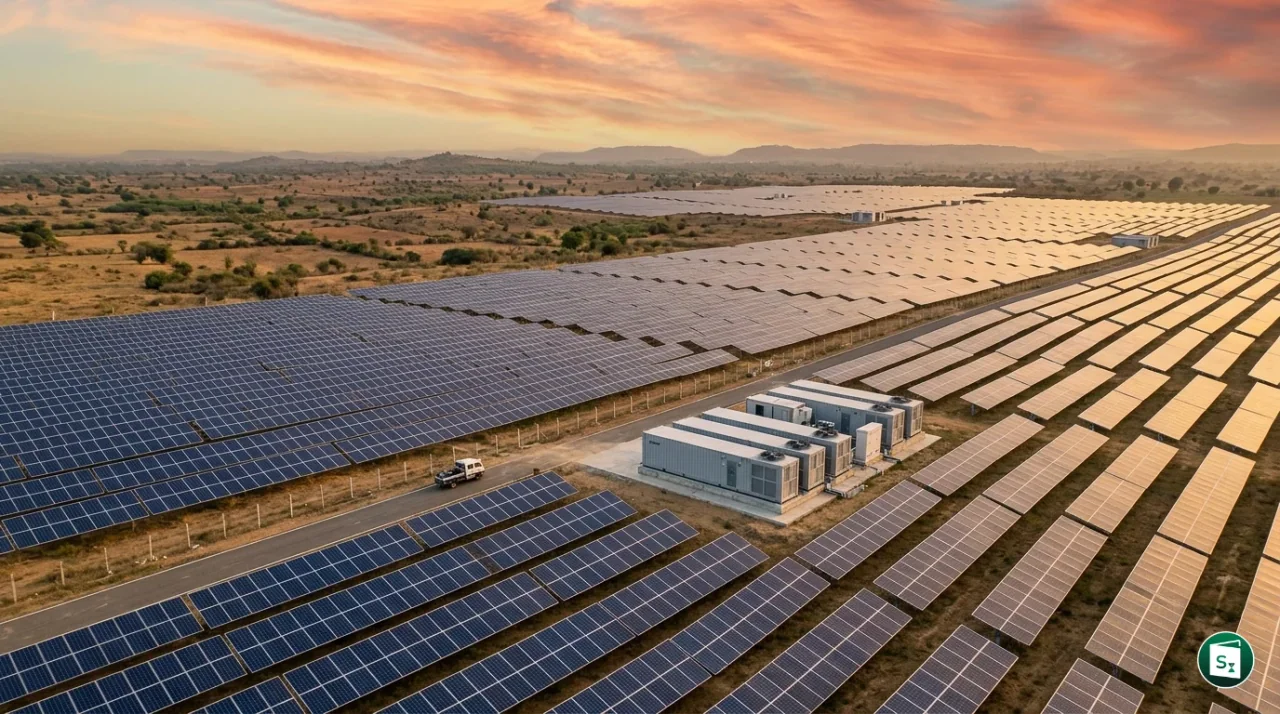
Union Minister Rajnath Singh approved a pioneering 250 MW solar power project at the Sitapur Ex-Cantonment area in Uttar Pradesh on June 9, 2026. This initiative marks India’s first large-scale green energy installation on vacant defence land, signalling a major shift toward sustainable land management within the armed forces. By integrating battery storage, the project ensures a reliable and round-the-clock power supply for military establishments in the region.
Harnessing Vacant Defence Land for Green Energy
The Sitapur solar project is a landmark development in the Ministry of Defence (MoD) roadmap to optimize its vast land holdings. Developed on approximately 850 acres of unutilised land in the former Sitapur Cantonment, the project serves as a pilot for a much larger national strategy. The MoD and the Armed Forces have identified nearly 46,000 acres of vacant land across the country that can be converted into renewable energy hubs over the next few years.
This move marks a transition from traditional land preservation to active asset optimization. By utilizing land that is not currently required for active military operations, the government aims to reduce the carbon footprint of the defence sector while generating clean energy. The Directorate General Defence Estates (DGDE) and the Integrated HQ of MoD (Army) are working closely to identify similar sites across various cantonments and military stations.
Sitapur Solar Project at a Glance
| Feature | Details |
|---|---|
| Capacity | 250 Megawatt (MW) |
| Location | Sitapur Ex-Cantonment, Uttar Pradesh |
| Land Area | Approximately 850 acres |
| Technology | Solar PV with integrated Battery Storage (BESS) |
| Implementing Agency | NTPC Limited (via competitive bidding) |
| Primary Beneficiary | Indian Armed Forces establishments in UP |
Integrated Battery Energy Storage System (BESS): Ensuring Reliable Power
A key technical highlight of the Sitapur installation is its Battery Energy Storage System (BESS). Traditional solar plants only generate power when the sun is shining, which can lead to intermittency issues. By integrating BESS, the Sitapur project becomes a solar-plus-storage facility, capable of storing surplus energy generated during the day and discharging it when needed, including during night hours or cloudy periods.
This storage capability is critical for military establishments that require a stable and uninterrupted power supply. The system helps in providing Firm and Dispatchable Renewable Energy (FDRE), making green power as reliable as conventional thermal or hydro power. Furthermore, the integration of BESS reduces the reliance on diesel generators, which are often used as backups in military stations, thereby significantly lowering operational costs and local air pollution.
NTPC Ltd: Implementing India’s Renewable Ambitions
The project will be implemented by NTPC Limited, India’s largest power utility, through its green energy wing. To ensure transparency and the best value for the government exchequer, the implementing agency is selected through a competitive bidding process. This method encourages private sector participation and helps in securing the most cost-effective tariff for the power generated.
NTPC, which was established in 1975 and is headquartered in New Delhi, has set an ambitious target of reaching 60 GW of renewable energy capacity by 2032. The company is already a major player in Uttar Pradesh, with several operational solar assets in locations like Bilhaur, Auraiya, and Singrauli. The Sitapur project adds a strategic layer to its portfolio by demonstrating the feasibility of large-scale renewable installations on institutional land.
Strategic Significance: Energy Security and Net Zero Goals
The approval of the Sitapur solar project aligns with India’s broader commitment to achieve Net Zero emissions by 2070. By transitioning to renewable sources, the Ministry of Defence is making a substantial contribution to the national climate goals. Beyond environmental benefits, the project is a strategic move to enhance energy security for the Indian Armed Forces. By generating power locally, military establishments reduce their dependence on the external commercial grid, which can be vulnerable during emergencies.
Additionally, the project is expected to yield significant economic savings. Procuring conventional grid power involves high recurring expenditures; however, transitioning to captive solar power will lower the electricity bills for defence establishments in Uttar Pradesh. The savings generated can be redirected toward other critical operational and modernization needs of the forces. This “pioneer” project paves the way for similar initiatives in other states, turning unutilised government assets into productive, green infrastructure.
Key Takeaways
- Union Minister Rajnath Singh approved a 250 MW solar power project at the Sitapur Ex-Cantonment area in Uttar Pradesh on June 9, 2026.
- This is the first large-scale green energy installation developed on vacant defence land, utilizing approximately 850 acres.
- The project features an integrated Battery Energy Storage System (BESS) to ensure a stable and round-the-clock power supply.
- NTPC Limited, established in 1975 and headquartered in New Delhi, will implement the project through a competitive bidding process.
- The initiative is part of a broader strategy to optimize nearly 46,000 acres of unutilised military land for renewable energy.
- The project supports India’s national goal of achieving Net Zero emissions by 2070 and enhances the energy security of the Armed Forces.