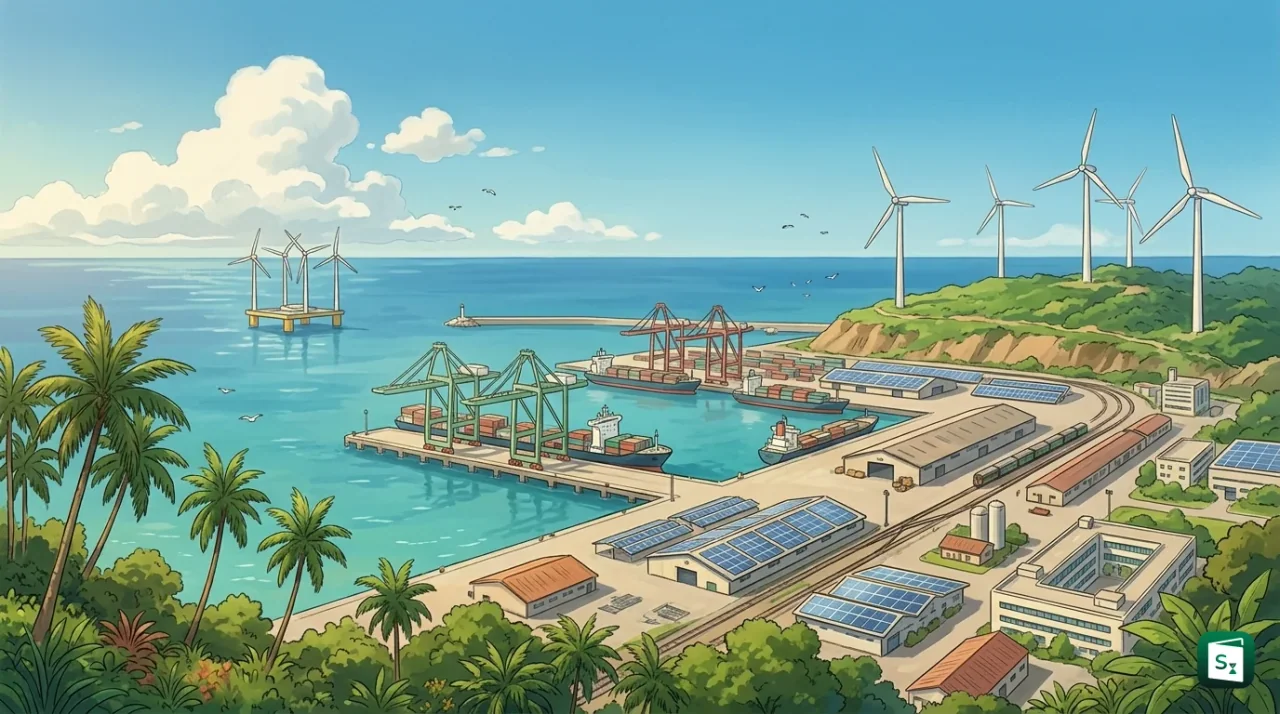
The V.O. Chidambaranar Port Authority in Thoothukudi, Tamil Nadu, has become India’s first major port to receive Scope-2 emission-free recognition from Bureau Veritas. The port has also obtained ISO 50001:2018 certification for its Energy Management System from the Indian Register Quality Systems (IRQS). Together, the two recognitions show progress in both the use of cleaner electricity and the systematic management of energy across port operations.
What Scope-2 Emission-Free Means
The term Scope 2 emissions refers to indirect greenhouse gas emissions released while generating purchased or acquired electricity, steam, heating, or cooling that an organisation consumes. These emissions do not come directly from equipment owned by the organisation. For a port, the category mainly relates to electricity used for buildings, cargo-handling systems, lighting, workshops, pumps, railway facilities, and other shore-based operations.
Scope-2 emission-free status therefore indicates that the port has addressed emissions linked to the electricity it purchases and uses, based on the certification methodology applied by Bureau Veritas. It does not mean that every activity connected with the port has no emissions. Fuel burned by port-owned vehicles or equipment is generally considered under Scope 1, while emissions from vessels, contractors, cargo movement, and wider supply-chain activities can fall under Scope 3.
The distinction is important because ports are energy-intensive nodes in international trade. Cutting electricity-related emissions can reduce the carbon footprint of port infrastructure while also encouraging the wider shift towards electric cargo equipment, renewable power, and cleaner maritime fuels.
Two Certifications, Two Different Functions
The Scope-2 recognition and the ISO certification measure related but different aspects of sustainability. Bureau Veritas is a global testing, inspection, and certification organisation. Its recognition provides external assurance about the port’s electricity-related emissions performance under the assessment boundary used for the certification.
ISO 50001:2018 is an international standard for an Energy Management System, commonly called an EnMS. It gives an organisation a structured way to review energy use, set performance objectives, monitor results, control energy-intensive processes, and improve performance continuously. The standard follows the Plan, Do, Check, Act approach, so certification is not a one-time declaration of efficiency.
The certification awarded by Indian Register Quality Systems, or IRQS, covers the systems used to manage energy consumption and losses, preventive maintenance, operational controls, energy monitoring and metering, renewable-energy installations, electric vehicles and charging infrastructure, shore-to-ship power systems, and continuing improvement in energy performance. Shore-to-ship power allows a berthed vessel to draw electricity from land instead of running its auxiliary engines for essential onboard needs.
VOC Port’s Green Transition
V.O. Chidambaranar Port, earlier known as Tuticorin Port, is located on Tamil Nadu’s southeastern coast. It is one of India’s 12 operational major ports, the second-largest port in Tamil Nadu, and an important gateway for the region’s industrial and international cargo activity. Major ports are administered by the Ministry of Ports, Shipping and Waterways, while non-major ports generally fall under state maritime authorities.
The port’s energy transition has combined generation, efficiency, and cleaner equipment. Its sustainability reporting indicated that renewable energy offset nearly 94% of its energy-consumption equivalent in financial year 2025-26, while net carbon emissions had fallen by about 45%. Renewable generation reportedly reached 15.5 GWh, and renewable electricity exceeded internal consumption during the final four months of that financial year.
The port has also developed a pilot green hydrogen project, expanded solar and wind power, installed electric-vehicle charging facilities, and used shore-to-ship power. In May 2026, an ongoing 9 MW wind power project was among the renewable initiatives reviewed at the port. Green hydrogen is hydrogen produced using renewable electricity to split water, and it can support future applications in port equipment, transport, and industrial fuel supply.
Earlier in 2026, the port’s administration building received the Indian Green Building Council Platinum Rating. The building operates on 100% renewable energy, with 89% generated through on-site solar power and the remaining 11% sourced from the port’s off-site renewable-energy resources. The port’s hospital and Central Industrial Security Force barracks also received Shunya Plus certification from the Bureau of Energy Efficiency, indicating net-positive energy performance for those buildings.
Policy Context and Maritime Significance
The achievement fits into the Harit Sagar Green Port Guidelines, issued by the Ministry of Ports, Shipping and Waterways in 2023. The guidelines encourage renewable-energy use, lower emissions per tonne of cargo, shore-to-ship power, electrification of port equipment, rainwater harvesting, and sustainable waste management. They set a direction for renewable energy to account for more than 60% of consumption at major ports by 2030 and more than 90% by 2047.
The guidelines are part of the wider Maritime India Vision 2030, which seeks to improve the efficiency, competitiveness, and sustainability of India’s maritime sector. The longer-term Maritime Amrit Kaal Vision 2047 provides a roadmap for expanding port capacity, modernising logistics, and building a cleaner maritime ecosystem. The Green Tug Transition Programme is another related measure, with a target of shifting at least half of the tug fleet at major ports to green fuels or electric and hybrid power by 2030 and the entire fleet by 2047.
VOC Port’s location also gives the milestone wider importance. Ports connect factories, farms, mines, energy projects, railways, and international shipping routes. Cleaner electricity at a major port can lower emissions from cargo operations, improve the environmental profile of supply chains, and create demand for renewable power and alternative fuels. The port has additionally been identified as one of the locations that can support India’s green hydrogen hub ambitions.
What the Status Does Not Cover
Scope-2 emission-free recognition should not be read as a claim that the port has eliminated all greenhouse gas emissions. It is limited to indirect emissions associated with purchased and consumed energy within the certified boundary. Direct fuel use, emissions from visiting ships, outsourced cargo transport, construction, waste, and other value-chain activities require separate measurement and reduction plans.
The ISO 50001:2018 certification also does not automatically mean that energy consumption has reached zero. It confirms that the port has established and operates a recognised system for measuring energy use, improving efficiency, and reviewing performance over time. Continued audits, accurate metering, transparent reporting, and further electrification will determine whether the initial gains remain durable as cargo volumes and energy demand increase.
Key Takeaways
- The V.O. Chidambaranar Port Authority in Thoothukudi became India’s first major port to receive Scope-2 emission-free recognition from Bureau Veritas.
- Scope 2 emissions are indirect greenhouse gas emissions linked to the generation of purchased and consumed electricity, steam, heating, or cooling.
- The port received ISO 50001:2018 certification for its Energy Management System from the Indian Register Quality Systems.
- Renewable energy offset nearly 94% of VOC Port’s energy-consumption equivalent in financial year 2025-26, according to its sustainability reporting.
- The Harit Sagar Green Port Guidelines, 2023 seek to raise renewable-energy use at major ports to more than 60% by 2030 and more than 90% by 2047.
- Scope-2 emission-free status does not cover all port-related emissions, such as direct fuel use, vessel emissions, or wider supply-chain emissions.