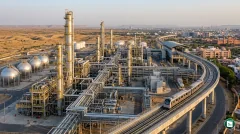
The Delhi Metro Rail Corporation (DMRC) recorded a train punctuality rate of 99.95% in 2026, according to the international benchmarking data released by the Community of Metros (COMET). This places the network among the top five most reliable metro systems in the world, ahead of well-established transit networks such as the New York Subway, the Paris Metro and Hong Kong’s MTR. COMET is an international consortium that brings together 45 of the world’s major metro systems for performance benchmarking.
What Is the Community of Metros (COMET)?
The Community of Metros, known by the acronym COMET, is the world’s leading international metro benchmarking group. It consists of 45 metro systems from 42 cities across the globe. The group is facilitated and managed by the Transport Strategy Centre (TSC) at Imperial College London, although the member metros themselves jointly own and steer the group.
COMET’s origins go back to 1994, when Hong Kong’s Mass Transit Railway Corporation proposed forming a benchmarking consortium with four other large systems, London Underground, Paris RATP, New York City Transit and Berlin BVG. This founding set became known as the Group of Five. In 1996, with new members joining, the group took the name Community of Metros, or CoMET. A sister group called Nova, formed in 1998, covered small and medium-sized metro systems. In 2021, the two groups were merged into a single body under the COMET name.
How COMET Measures Performance
The entire exercise runs on a strict confidentiality framework. Member metros share their detailed operational data with one another, and anything released publicly is anonymised. Using a system of key performance indicators (KPIs), COMET compares the long-term performance of its members across six broad areas: growth and innovation, financial performance, customer satisfaction, internal processes, safety and security, and environmental impact.
Around 30 top-level indicators are tracked, covering everything from punctuality and train reliability to energy use and staffing. The purpose is not to rank metros for publicity, but to identify best practices that members can learn from and adopt. Where one system shows a clear improvement, COMET carries out detailed case studies and expert workshops so that other members can replicate the approach.
How Delhi Metro Measures Punctuality
Delhi Metro follows a far stricter definition of punctuality than most global systems. A train is counted as delayed if it arrives at its destination more than 59 seconds after its scheduled time. By comparison, many metro networks in other countries only register a delay once a train is several minutes late.
Under this demanding standard, DMRC recorded punctuality of 98.27% in 2003, its first full year of operation, and improved it to 99.64% in 2005. This early performance put Delhi Metro in an elite league of systems that crossed the 99% mark within two years of starting services. Since then, the network has consistently held punctuality at around 99.9%, and in 2026 the figure rose to 99.95% even as the network kept expanding.
Another indicator cited by DMRC is the Mean Distance Between Failures (MDBF), which measures the average distance a train travels before a service-affecting failure. Delhi Metro’s MDBF stands at 2.72 million car-kilometres, a reflection of the high reliability of its rolling stock and signalling systems. On the reliability ranking based on COMET’s two-minute delay criterion, DMRC has consistently figured among the top five metro systems globally.
Delhi Metro at a Glance
The Journey from 2002 to Today
The Delhi Metro began operations on 25 December 2002, when the first stretch of the Red Line, running 8.4 km between Shahdara and Tis Hazari with six stations, was thrown open to the public. In its first year, the network carried around 82,000 passenger journeys a day. Over the next two decades it grew into India’s largest metro network, spanning 416.5 km across 12 lines and 303 stations, with 31 interchange stations connecting Delhi and the National Capital Region.
Ridership has grown just as sharply. The network now records an average of 64.06 lakh passenger journeys every day, and it hit its highest single-day ridership of more than 81 lakh journeys on 8 August 2025. To manage this load, the headway, the gap between successive trains, has been reduced on the busiest corridors from seven minutes in the early years to 2 minutes 18 seconds today.
Driverless Operations: A Key to Reliability
A significant share of Delhi Metro’s reliability comes from automation. Around 29% of the network now operates under Unattended Train Operation (UTO), a system where trains run without a driver on board, also called Grade of Automation 4. Delhi Metro operates India’s largest driverless network.
The flagship of this automation push is the Pink Line, or Line 7, which spans 71.55 km with 45 stations and is described as the world’s longest driverless metro line. Completed as a full circular corridor in 2025 and 2026, the Pink Line provides interchanges with most other Delhi Metro lines, offering commuters alternate routes and easing pressure on the crowded central interchange stations.
Why This Achievement Matters
Sustaining near-perfect punctuality while operating a large and expanding network is not easy. In most transit systems, reliability tends to dip as a network ages and maintenance demands multiply. Delhi Metro has defied that pattern, holding punctuality around 99.9% year after year even as it added new lines, stations and trains.
The achievement matters for several reasons. For the roughly 64 lakh daily passengers, a punctual train means dependable travel times for reaching work, school or the airport. Fewer breakdowns also mean safer, more comfortable journeys, since service disruptions on a metro can quickly cause crowding on platforms.
For the city as a whole, a reliable metro draws more commuters away from private vehicles. This reduces road congestion, cuts fuel consumption and brings down air pollution, all urgent concerns for Delhi. The metro is widely credited as one of the main reasons the city has managed to keep a lid on the growth of private transport despite rising incomes.
There is also a broader economic argument. Global cities compete to attract investment, talent and business events, and a world-class public transport system is a key part of that appeal. A metro that reliably outperforms the networks of New York, Paris and Hong Kong strengthens India’s reputation as a nation capable of delivering complex infrastructure to a high standard.
India’s Growing Metro Network: The Bigger Picture
The Delhi Metro’s performance is part of a much larger urban transport story in India. The country’s metro journey began with the Kolkata Metro in 1984, India’s first rapid transit system, which is operated by Indian Railways. For nearly two decades after that, expansion was slow. The modern phase of growth started with the Delhi Metro in 2002.
India’s operational metro network has since crossed 1,000 km, spread across 23 cities and 11 states, making it the third-largest metro network in the world after China and the United States. Daily ridership across Indian metros has crossed one crore. The network grew from about 248 km in 2014 to more than 1,000 km in 2025, and construction is under way on another roughly 1,000 km of lines.
Newer systems, such as the Namma Metro in Bengaluru and the Chennai Metro, have also joined COMET, reflecting India’s growing integration with global best-practice networks. Modern projects are pushing fresh boundaries, from the underwater metro tunnel beneath the Hooghly River in Kolkata to driverless train operations in Delhi.
Key Takeaways
- The Delhi Metro Rail Corporation (DMRC) recorded a 99.95% train punctuality rate in 2026, ranking it among the top five most reliable metro systems in the world.
- Delhi Metro outperformed the New York Subway, the Paris Metro and Hong Kong’s MTR on the reliability benchmark set by the Community of Metros (COMET).
- COMET is an international benchmarking consortium of 45 metro systems from 42 cities, facilitated by the Transport Strategy Centre at Imperial College London.
- DMRC counts a train as delayed if it arrives more than 59 seconds behind schedule, a stricter standard than most global metro systems.
- Delhi Metro spans 416.5 km across 12 lines and 303 stations, carrying an average of 64.06 lakh passenger journeys daily.
- The Pink Line (Line 7), spanning 71.55 km with 45 stations, is the world’s longest driverless metro line, operating under Unattended Train Operation (UTO).
- India’s operational metro network has crossed 1,000 km, making it the third-largest in the world after China and the United States.