The Ministry of Tribal Affairs signed a five year Memorandum of Understanding with the Indira Gandhi National Centre for the Arts in New Delhi on 28 September 2026. The pact will identify, document, digitise and promote tribal languages, oral traditions, art forms, music, cuisine and traditional ecological knowledge. It places special focus on cultural traditions that are endangered or at risk of being lost.
What Does the Five Year MoU Cover?
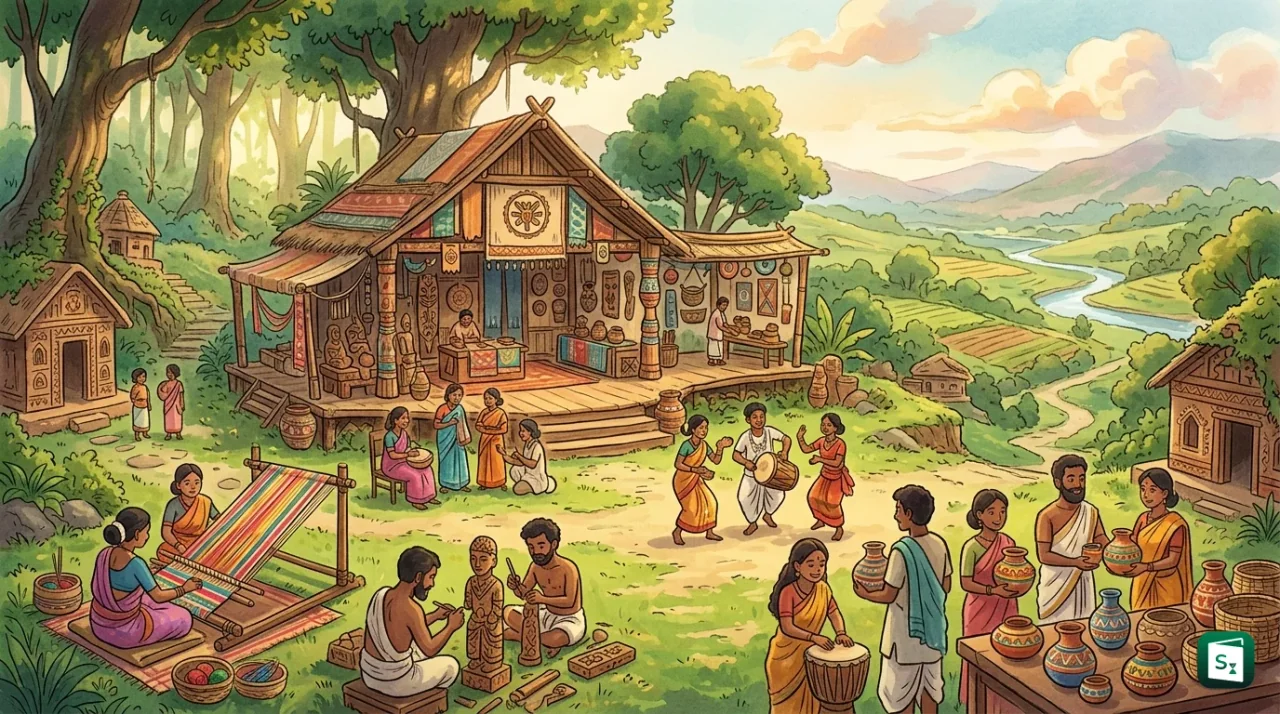
The Ministry of Tribal Affairs and the Indira Gandhi National Centre for the Arts signed the Memorandum of Understanding (MoU), which is a formal written promise of cooperation between two institutions, on 28 September 2026 in New Delhi. The MoU will remain in force for five years. It covers the identification, preservation, documentation, digitisation, publication and dissemination of tribal arts, music, musical instruments, cuisines and other cultural traditions.
The Ministry of Tribal Affairs stated that the pact also covers customary practices and traditional ecological knowledge, which means the knowledge tribal groups hold about forests, water, seeds, medicines and seasons. The two institutions will build knowledge repositories and archives. They will organise exhibitions dedicated to tribal culture.
The MoU supports sustainable livelihood programmes for tribal artisans and performers by giving them space on national and international platforms through exhibitions and workshops. It provides for academic exchanges, knowledge sharing and capacity building programmes on the history, culture and social development of tribal communities. The plan also includes dedicated galleries and modern digital museums that will display tribal arts and artefacts and record the contribution of tribal communities to the freedom struggle.
The pact is non financial. It does not involve any transfer of funds, grants, fees or other payment between the two institutions. All activities will be carried out on a mutually agreed and best efforts basis, subject to institutional resources and approvals. A Joint Coordination Committee may be set up to guide the work and review progress.
What Is IGNCA?
The Indira Gandhi National Centre for the Arts (IGNCA) is an autonomous trust under the Ministry of Culture that documents, preserves, conserves and spreads knowledge of Indian arts and cultural heritage and trains professionals for cultural work. The Ministry of Culture established IGNCA in 1987 in New Delhi, where its main office functions from the Janpath Building.
The IGNCA works as a major resource centre for written, oral and visual materials. It studies creative literature, visual arts such as architecture, sculpture, painting and photography, and performing arts such as music, dance and theatre, along with fairs, festivals and lifestyle practices that carry artistic value. The Centre follows a multidisciplinary method, which means experts from many fields work together on the same cultural subject.
The IGNCA is guided by a Board of Trustees, and its executive head is the Member Secretary. The Centre functions through six functional units that divide research, archiving, display and administration work.
| Unit | Core Work |
|---|---|
| Kala Nidhi | Multi form library and reference collection |
| Kala Kosa | Study and publication of basic texts in Indian languages |
| Janapada Sampada | Study of lifestyle, folklore and community practices |
| Kaladarsana | Conversion of research into exhibitions and performances |
| Cultural Informatics | Use of technology for cultural preservation and spread |
| Sutradhara | Administration and coordination of all activities |
The IGNCA operates through nine regional centres, each with a fixed research focus. The list helps readers connect this MoU with the right centre for tribal work.
| Location | Research Focus |
|---|---|
| Varanasi, Uttar Pradesh | Agam Darshan |
| Guwahati, Assam | North East Culture Centre |
| Bengaluru, Karnataka | Civilisation and Performing Arts |
| Ranchi, Jharkhand | Tribal Heritage Studies |
| Vadodara, Gujarat | Modern Art |
| Goa | Inter Cultural Relationship |
| Thrissur, Kerala | Vaidik Parampara and Performing Studies |
| Puducherry | Archaeological and Epigraphy Studies |
| Jammu and Kashmir | Shiva Darshan |
The IGNCA Regional Centre in Ranchi directly supports the new pact. The Ranchi centre was set up after an MoU between the IGNCA and Ranchi University on 10 February 2017. It studies, preserves and spreads knowledge of the rich culture and arts of the tribes of eastern India, with a special focus on Jharkhand.
What Is a Tribal Community and What Is Tribal Art?
What is tribal community?
A tribal community in India is a group listed as a Scheduled Tribe that shares a common language or dialect, customary laws, kinship ties and a close link with land and forests. India is home to more than 10.45 crore tribal citizens, which is about 8.6 percent of the total population, spread across over 700 communities. The list includes 75 Particularly Vulnerable Tribal Groups (PVTGs), which are groups identified for very low population, pre agricultural technology and low literacy.
What is tribal art?
Tribal art is the visual, musical and performance based expression of tribal life, made with local materials and knowledge passed down by word of mouth. It includes painting, sculpture, textiles, jewellery, dance, music, musical instruments, food practices and house decoration. Well known painting styles include Warli painting from Maharashtra and Gujarat, Gond painting from Madhya Pradesh and Chhattisgarh, and Sohrai and Kohbar painting from Jharkhand, while dance and dress vary with every community and festival season.
Tribal culture covers more than art objects. It includes oral stories, songs, proverbs, birth and marriage customs, healing practices, farming methods, seed conservation and rules for protecting sacred groves and water sources. The new MoU treats all these elements as one living system. This is why the pact links language recording with craft promotion, and museum display with field research.
How Will the Two Institutions Divide Responsibilities?
The Ministry of Tribal Affairs was set up in 1999 after the bifurcation of the Ministry of Social Justice and Empowerment to give focused attention to the integrated social and economic development of Scheduled Tribes. Jual Oram is the Union Minister for Tribal Affairs (as of September 2026), and Ranjana Chopra is the Secretary of the Ministry.
Under the new MoU, the Ministry of Tribal Affairs will identify priority areas and themes for documentation and preservation. The Ministry will coordinate with Tribal Research Institutes (TRIs), which are state level research bodies supported by the central Ministry for studies, publications, audio visual documentation and cultural exchange on tribal heritage. The Ministry will also bring tribal scholars, artists, artisans, cultural practitioners, language experts and holders of traditional knowledge into research, documentation, exhibitions and workshops.
The IGNCA will provide academic, technical, archival and curatorial support. Curatorial work means the professional job of selecting objects, writing labels, designing galleries and caring for collections. Through its regional centres, the IGNCA will help TRIs record tribal languages, oral traditions, folklore, traditional knowledge, arts, crafts, music, dance, material culture and customary practices. The IGNCA will also help design museum layouts, digital displays and interactive cultural content, including material for the IGNCA digital library and archives.
The two institutions will support youth camps in schools, universities and other centres of learning. These camps will introduce students to tribal cultural values, conservation practices and the diversity of customary rules. The goal is to build respect for tribal knowledge among young learners and to create a new group of researchers and volunteers for field documentation.
The MoU lays down clear rules on intellectual property. Intellectual property created under the MoU will belong to the Ministry of Tribal Affairs. Any income from its use will be used for the benefit of the concerned tribal communities through systems set up by the Ministry, subject to existing laws. The arrangement will not harm the recognised traditional and community rights of tribal groups and knowledge keepers over folklore, languages, art forms, oral traditions, traditional medicines, technologies and customary practices.
Tribal Museum Network and Digital Preservation Infrastructure
Physical museums form the backbone of tribal preservation in India. State governments manage most tribal museums, while central institutions provide research, design and archiving help. The new MoU will strengthen this network with dedicated galleries and modern digital museums that use audio, video, touch screens and virtual walkthroughs.
| Museum | Location and Note |
|---|---|
| Madhya Pradesh Tribal Museum, Bhopal | Opened on 6 June 2013 at Shyamla Hills. It displays the living culture of the Gond, Bhil, Bharia, Saharia, Korku, Kol and Baiga groups through six theme galleries on housing, cultural diversity, art, spiritual life and children games. |
| Tribal Museum, Araku | Located in Andhra Pradesh. It focuses on the tribes of the Eastern Ghats and attracts high public interest every December season. |
| Odisha State Tribal Museum, Bhubaneswar | Displays the crafts, houses and customs of the many tribal groups of Odisha, including Particularly Vulnerable Tribal Groups. |
| Tribal Museum, Ooty | Located in Tamil Nadu. It records the culture of the Toda, Kota, Kurumba and other Nilgiri groups. |
The Ministry of Tribal Affairs has also sanctioned 10 Tribal Freedom Fighters Museums to record the role of tribal heroes in the freedom struggle and to display the rich heritage of each region. These museums link cultural display with history teaching. The IGNCA help with gallery design and digital content will be useful for both the existing tribal museums and these new history linked museums.
Digital tools add a second layer of safety. Once a song, story or craft method is recorded with audio, video, photographs and written notes, it can be stored in a digital library and shared with researchers, schools and the community itself. The IGNCA already runs a digital library, digital repository, manuscript catalogue and archives for this purpose. Under the MoU, similar tribal repositories will record endangered languages and oral traditions before the last fluent speakers pass away. This work supports other national efforts such as the Scheme for Protection and Preservation of Endangered Languages, which is implemented by the Central Institute of Indian Languages in Mysuru.
Why Preservation Cannot Wait
Many tribal languages have no widely used script and survive only through speech. When elder speakers pass away, stories, songs, names of plants, farming calendars and healing methods disappear with them. A study prepared with UNESCO and the IGNCA has warned that the loss of a language means the loss of irreplaceable cultural heritage and traditional knowledge systems. The Asur language of Jharkhand, spoken by a Particularly Vulnerable Tribal Group with a population of about 33,000 in the 2011 Census and listed by UNESCO as definitely endangered, shows how narrow the window for recording can become.
The MoU answers this urgency with a clear order of work. First, the Ministry of Tribal Affairs and the IGNCA will list the most threatened traditions for early recording. Then field teams with tribal experts will collect audio, video and written records with community consent. Then curators will turn these records into archives, publications, galleries and digital displays that schools and researchers can use. Youth camps and academic exchanges will train the next generation of documenters from within the communities themselves.
The economic link is equally important. Many tribal crafts lose makers because makers cannot find buyers. By connecting artisans and performers to national and international exhibitions, the pact ties cultural pride to income. If documentation leads to better museum shops, craft orders and performance fees, young people will have a reason to learn and continue the tradition. The test of the five year pact will therefore lie in steady field work, open digital access, fair use of intellectual property and visible benefits reaching the knowledge holders.
Key Takeaways
- The Ministry of Tribal Affairs and the Indira Gandhi National Centre for the Arts signed a five year MoU on 28 September 2026 for tribal heritage preservation.
- The MoU covers documentation, digitisation and promotion of tribal arts, music, cuisine, languages and traditional ecological knowledge.
- The IGNCA, established in 1987 under the Ministry of Culture, works through six units and nine regional centres, including Ranchi for Tribal Heritage Studies.
- The Ministry of Tribal Affairs, set up in 1999, will work with Tribal Research Institutes while the IGNCA will give archival and curatorial support.
- Intellectual property under the MoU will belong to the Ministry of Tribal Affairs, with proceeds reserved for the concerned tribal communities.
- The Madhya Pradesh Tribal Museum in Bhopal, opened on 6 June 2013, is a key model in the national tribal museum network.