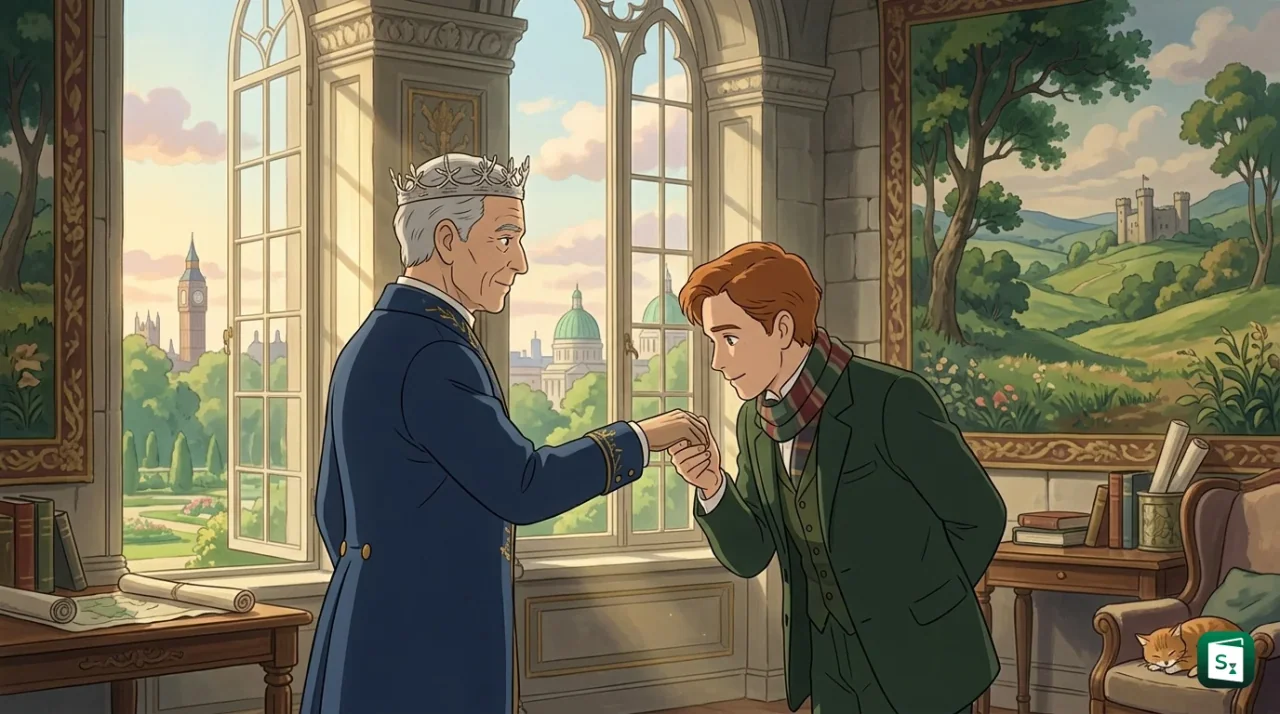
Andy Burnham became the 59th Prime Minister of the United Kingdom on 20 July 2026 after being formally invited by King Charles III at Buckingham Palace to form a new government. He took over from Sir Keir Starmer, who resigned the same day after mounting pressure from within his own Labour Party. Burnham, a former Mayor of Greater Manchester who returned to Parliament only weeks earlier, is the UK’s seventh prime minister in a decade.
Who Is Andy Burnham?
Andrew Murray Burnham was born on 7 January 1970 in Liverpool, England, and grew up in a village in Cheshire. He studied English at the University of Cambridge and began his career in journalism before working as a researcher and adviser to Labour politicians. He was first elected to the House of Commons as the MP for Leigh in 2001 at the age of 31.
Burnham held several cabinet positions under Prime Minister Gordon Brown. He served as Chief Secretary to the Treasury (2007-2008), Secretary of State for Culture, Media and Sport (2008-2009), and Secretary of State for Health (2009-2010). As health secretary, he pushed for a publicly funded care system for older and disabled adults. He also launched a government inquiry into the Hillsborough disaster, which cleared the victims of blame and held police failures responsible.
After Labour lost power in 2010, Burnham ran twice for the party leadership, finishing fourth in 2010 and second to Jeremy Corbyn in 2015. In 2017, he left Parliament to successfully run for Mayor of Greater Manchester, a position he held for nine years. As mayor, he brought bus services back under public control through the Bee Network, oversaw a surge in private investment, and built a reputation as a vocal advocate for northern England.
During the COVID-19 pandemic, Burnham clashed with the Conservative government over lockdown restrictions and financial support, earning the nickname “King of the North” for standing up for the region. His popularity made him one of Britain’s most recognisable politicians outside Westminster.
How Andy Burnham Reached Downing Street
Burnham’s path to the premiership was extraordinarily swift. In May 2026, the Labour Party suffered heavy losses in local and regional elections, triggering a crisis of confidence in Prime Minister Keir Starmer’s leadership. Starmer had won the 2024 general election in a landslide, ending 14 years of Conservative rule, but his popularity declined sharply due to economic stagnation, unpopular welfare cuts, and perceptions of weak leadership.
The turning point came in June 2026. Burnham won a high-profile special election (by-election) for the constituency of Makerfield in northwest England on 19 June, defeating the candidate from Reform UK, the right-wing populist party led by Nigel Farage. Three days later, on 22 June, Starmer announced his resignation after losing the confidence of his own parliamentary party.
With his main rival Wes Streeting choosing to back him rather than contest the leadership, Burnham ran unopposed for the Labour leadership. He was formally elected Labour Party leader on 17 July 2026. Just three days later, on 20 July, he travelled to Buckingham Palace for the formal ceremony that would make him prime minister.
The Kissing Hands Ceremony
The official transfer of power from Starmer to Burnham took place through a centuries-old constitutional ritual known as “kissing hands.” This is the formal process by which the British monarch appoints a new prime minister.
The ceremony unfolded in three stages. First, Keir Starmer travelled to Buckingham Palace and tendered his resignation to King Charles III. Then, Andy Burnham arrived at the Palace for a private audience with the King. During this meeting, the monarch formally invited him to form a government. Burnham accepted, and the appointment was complete. Finally, Burnham returned to 10 Downing Street to deliver his first speech as prime minister, laying out his priorities for the nation.
The term “kissing hands” dates back to a time when ministers literally kissed the sovereign’s hand as a gesture of loyalty upon accepting office. Today, the physical gesture is no longer performed, but the phrase remains in use as a constitutional term. Burnham is the fourth prime minister to serve during the reign of King Charles III, following Liz Truss, Rishi Sunak, and Sir Keir Starmer.
This ceremony is one of the oldest constitutional procedures in the British political system. It allows for a seamless transfer of power without requiring a general election, as the prime minister is appointed by the monarch based on their ability to command a majority in the House of Commons.
The UK Political System: A Constitutional Monarchy
The United Kingdom operates as a constitutional monarchy with a parliamentary system of government. The monarch, currently King Charles III, is the Head of State, but his role is largely ceremonial and non-partisan. The Prime Minister is the Head of Government and exercises actual executive authority.
Key features of the UK political system include:
| Feature | Description |
|---|---|
| Head of State | The monarch (King Charles III), whose powers are largely symbolic and exercised on the advice of ministers |
| Head of Government | The Prime Minister, who leads the Cabinet and oversees policy and administration |
| Legislature | Bicameral Parliament: the elected House of Commons and the appointed House of Lords |
| Executive | The Prime Minister and Cabinet, responsible for running the government |
| Constitutional Basis | Largely uncodified, based on statutes, conventions, judicial decisions, and treaties |
The monarch’s constitutional functions include appointing the Prime Minister, giving Royal Assent to bills passed by Parliament, opening and proroguing Parliament, and acting as Commander-in-Chief of the armed forces. In practice, these powers are exercised strictly on the advice of elected ministers.
The UK does not have a single written constitution. Instead, its constitutional arrangements are spread across multiple sources, including landmark statutes such as the Magna Carta (1215), the Bill of Rights (1689), the Act of Settlement (1701), and the Parliament Acts of 1911 and 1949.
A Decade of Political Turmoil
Burnham is the seventh prime minister the UK has seen in just ten years, a period of remarkable political instability:
| Prime Minister | Party | Tenure | Reason for Departure |
|---|---|---|---|
| David Cameron | Conservative | 2010-2016 | Resigned after Brexit referendum |
| Theresa May | Conservative | 2016-2019 | Resigned after failing to pass Brexit deal |
| Boris Johnson | Conservative | 2019-2022 | Resigned amid ethics scandals |
| Liz Truss | Conservative | 2022 (50 days) | Resigned after mini-budget crisis |
| Rishi Sunak | Conservative | 2022-2024 | Lost general election |
| Keir Starmer | Labour | 2024-2026 | Resigned after party revolt |
| Andy Burnham | Labour | 2026-present | In office |
This rapid turnover began with the June 2016 Brexit referendum, which triggered a cascading series of political crises. The Conservative Party went through five leaders between 2016 and 2024. Starmer’s Labour government, despite its landslide victory in 2024, lasted barely two years before internal divisions forced him out.
Key Takeaways
- Andy Burnham became the 59th Prime Minister of the United Kingdom on 20 July 2026 after being invited by King Charles III to form a government.
- The transfer of power took place through the traditional “kissing hands” ceremony at Buckingham Palace, a centuries-old constitutional ritual where the monarch appoints the prime minister.
- Burnham succeeded Sir Keir Starmer, who resigned on 22 June 2026 after losing the confidence of his Labour Party, just two years after winning a landslide general election.
- Burnham was previously the Mayor of Greater Manchester for nine years and served as a cabinet minister under Prime Minister Gordon Brown, including as Health Secretary and Culture Secretary.
- He is the fourth prime minister to serve under King Charles III and the seventh UK prime minister in a decade, reflecting a period of sustained political instability since the 2016 Brexit referendum.
- The United Kingdom is a constitutional monarchy where the monarch is Head of State but the Prime Minister is Head of Government, and it has an uncodified constitution based on statutes, conventions, and judicial precedents.